Several Indian states have urged the Centre to amend the country's forest conservation law to recognize grassland restoration under compensatory afforestation. The demand was made at the 90th Meeting of the Standing Committee of the National Board for Wildlife (SC-NBWL) on March 21, 2025, by Karnataka, Rajasthan, Gujarat, Madhya Pradesh, and Jammu and Kashmir.
The states said suitable amendments or clarifications under the Van (Sanrakshan Evam Samvardhan) Adhiniyam, 1980 were needed to bring grassland restoration within the compensatory afforestation framework, while balancing conservation priorities with grazing requirements and the livelihood needs of communities dependent on these lands.
A senior environment ministry official cautioned that the recommendation must be read carefully, as compensatory afforestation plantations may alter the ecological characteristics of grasslands.
The meeting also heard a detailed presentation from the Centre of Excellence on Sustainable Land Management (CoE-SLM) under the Indian Council of Forestry Research and Education (ICFRE), which recommended a vegetation-type and dominant-species based approach to mapping grasslands.
Drylands, which include grasslands and rangelands, cover approximately 228 million hectares, or about 69% of India's land area, and have a high climate-relevant ecosystem service value, with a carbon sequestration potential of 2.3 to 7.3 billion tonnes of CO2 equivalent per year.
The committee decided that CoE-SLM will submit a detailed project report for an Atlas of Grasslands of India, covering status and associated biodiversity, and seek funding under the Compensatory Afforestation Fund.
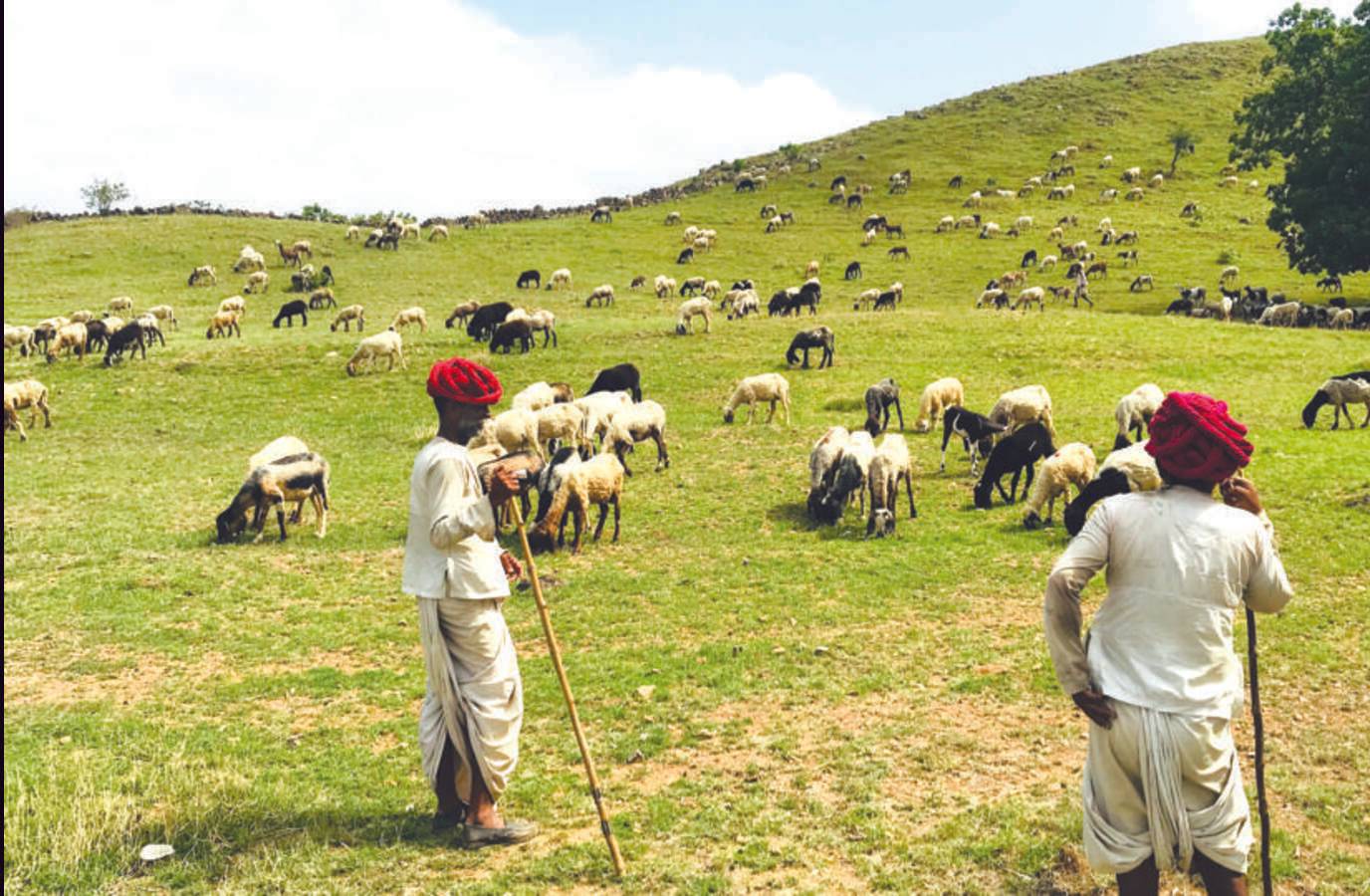
The meeting also took up the condition of pastoral communities whose seasonal migration routes pass through protected forests and sanctuaries, and the Wildlife Institute of India (WII) will undertake a study on nomadic communities in Rajasthan, Gujarat, Maharashtra, Uttar Pradesh, and Uttarakhand.