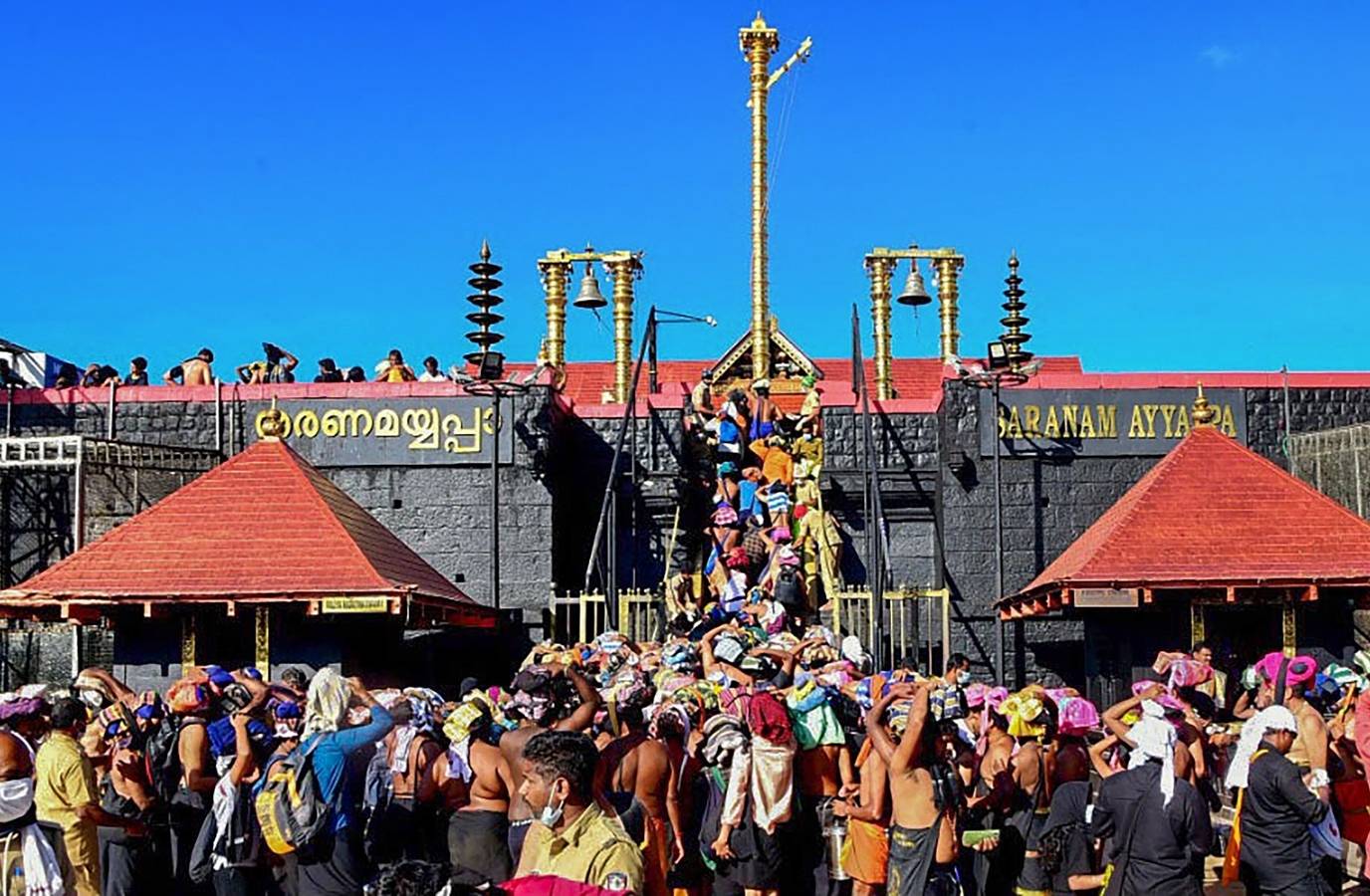
The Supreme Court has constituted a nine-judge bench to review the Sabarimala temple case, reflecting a diverse cross-section of the court in terms of gender, religion, caste, and regional representation.
The bench, headed by Chief Justice of India Surya Kant, includes justices BV Nagarathna, MM Sundresh, Ahsanuddin Amanullah, Aravind Kumar, AG Masih, R Mahadevan, Prasanna B Varale, and Joymalya Bagchi.
The composition of the bench reflects institutional inclusivity and appears calibrated to lend wider legitimacy to a verdict that will inevitably traverse contested terrain, encompassing women's entry into a temple and a mosque, essential religious practices, and the limits of judicial review over matters of faith.
The bench draws heavily from southern India, where the dispute originates, and includes justices from different religious communities, adding to the perception of a broadly representative constitutional forum deciding questions that affect multiple faith traditions.
The nine-judge bench will examine whether a Parsi woman retains her religious identity after marrying a person of another faith under the Special Marriage Act, and will also consider a parallel challenge concerning the entry of Muslim women into mosques and dargahs.