There has been a striking pattern in voter list deletions in West Bengal’s Nandigram, with Muslims, who make up about 25% of the population, accounting for 95.5% of removals across seven supplementary lists.
Non-Muslims, who constitute roughly 75% of the population, accounts for just 4.5%, according to data sourced from the Election Commission of India (ECI).
The figures are based on an analysis by the Sabar Institute, a Kolkata-based public policy research organisation, which examined ECI voter roll data from supplementary lists 1, 2, 3, 4a, 7, 8 and 9.
In six of these, the share of Muslims removed ranges from 60.9% to 98.7%. The trend cuts across gender lines, with variations in male and female deletions, but a consistent religious skew.
The only exception is list 4a, where 100% of those removed were non-Muslim women, with no Muslim deletions recorded.
A separate dataset from December 2025, based on the ECI’s Absent, Shifted, Deceased and Duplicate (ASDD) criteria, shows Muslims accounting for 33.3% of deletions and non-Muslims 66.7%.
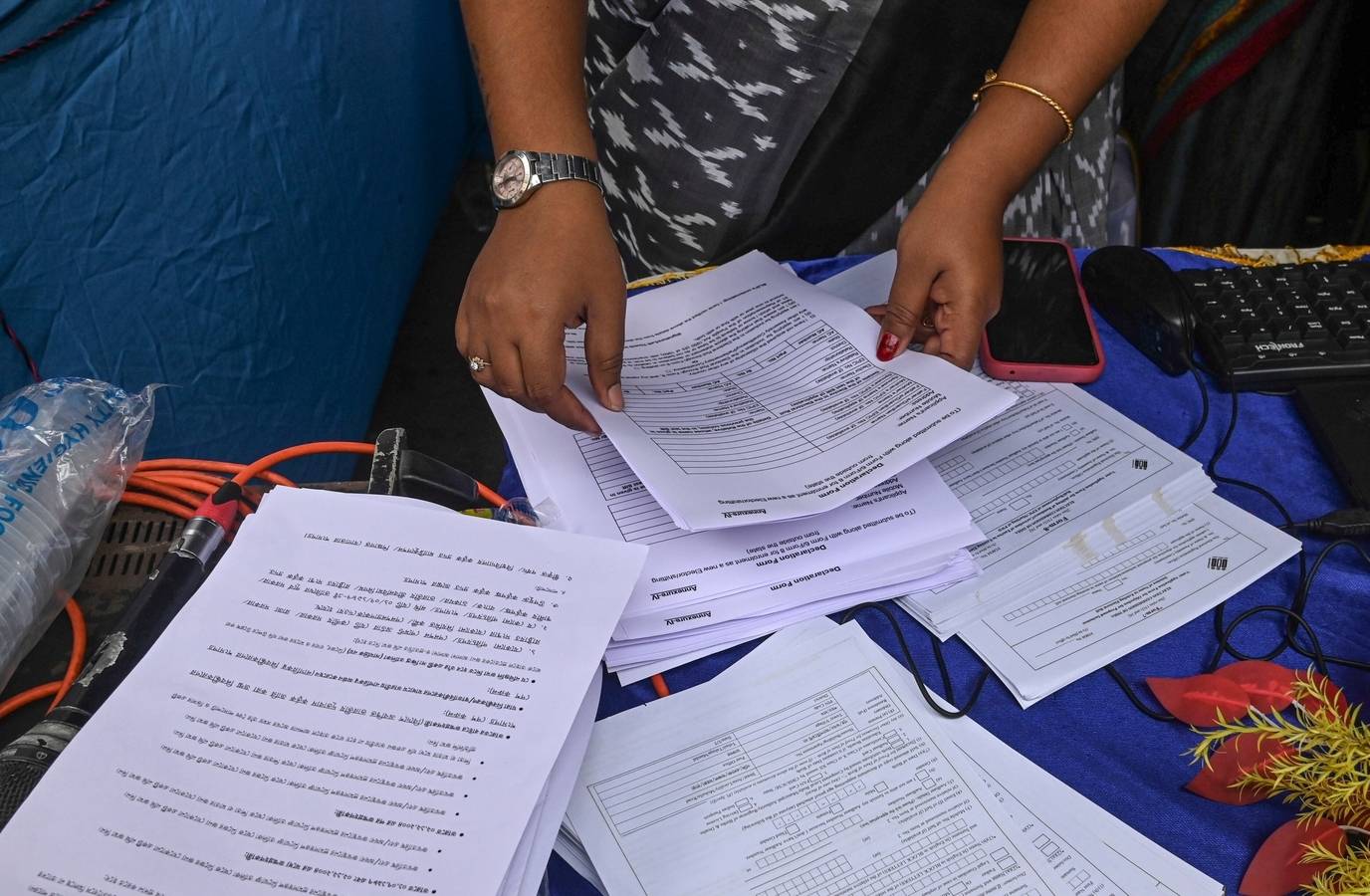
Voters whose names were deleted after scrutiny by judicial officers could appeal before 19 appellate tribunals set up by the ECI across West Bengal.
April 6 is the last date for filing nominations for the first phase of the assembly elections, which includes Nandigram, scheduled to vote on April 23.
Nandigram remains one of West Bengal’s most politically sensitive constituencies.