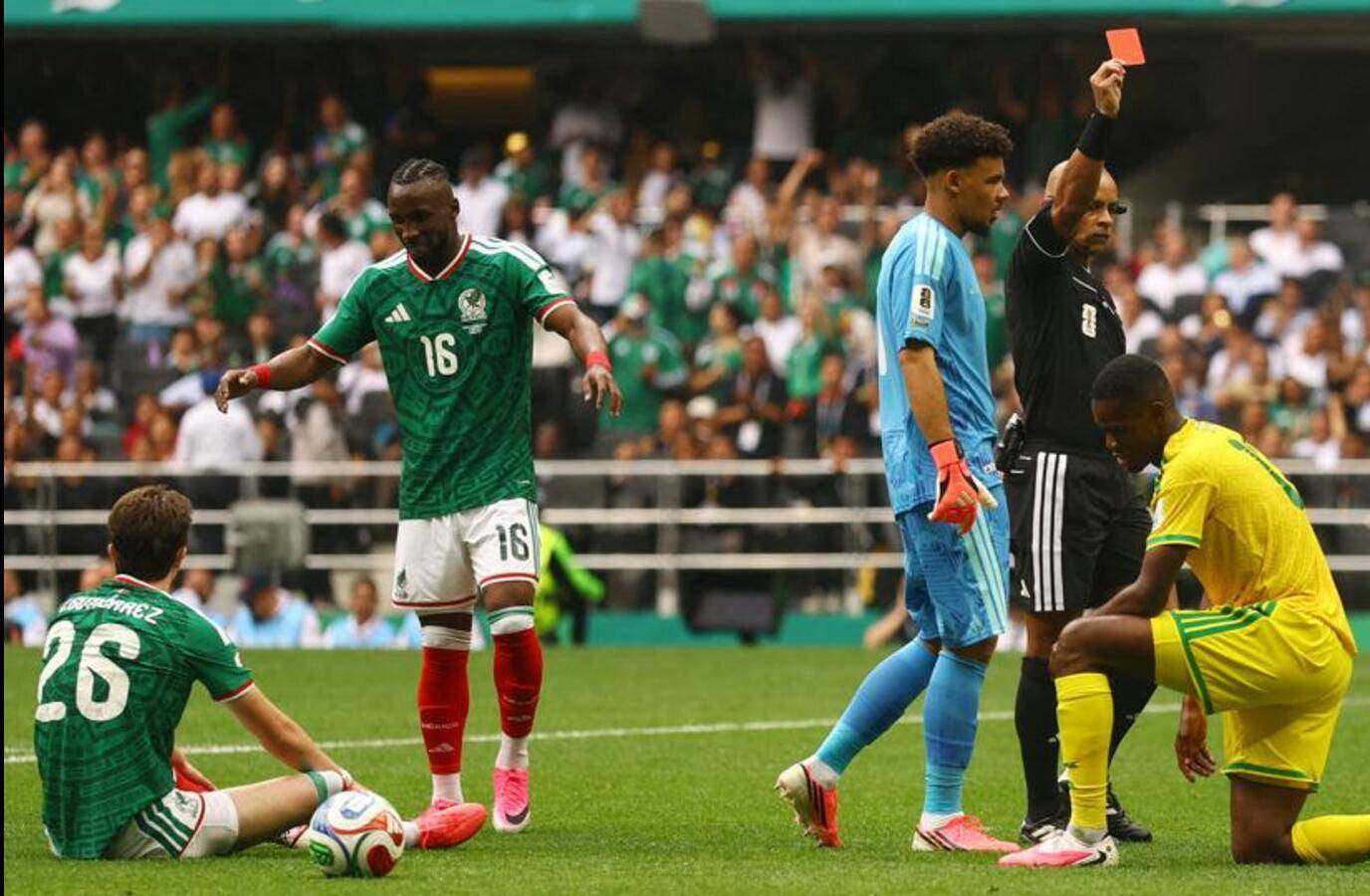
On the opening day of the 2026 FIFA World Cup, three red cards were brandished, marking a significant shift in refereeing approach. South Africa's Yaya Sithole and Themba Zwane were sent off, followed by Mexico's Cesar Montes in stoppage time, in a match that saw the hosts win 2-0.
Referee Wilton Sampaio's performance has sparked a global conversation, with some questioning the harshness of the decisions, particularly the third red card. However, FIFA's Chief Refereeing Officer Pierluigi Collina has emphasized the importance of protecting player safety, stating that referees should issue red cards for any challenges that may endanger a player's well-being.
The 2026 World Cup has seen a significant increase in red cards, with nearly matching the total of four red cards from the previous two tournaments combined. This crackdown on foul play is a warning to teams that reckless challenges will not be tolerated.
As the tournament progresses, teams will need to adapt to the new refereeing approach, which aims to promote a safer and more respectful game. With 48 teams participating, the World Cup has become a global stage, and the line has been drawn – one that teams have now been warned not to cross.