
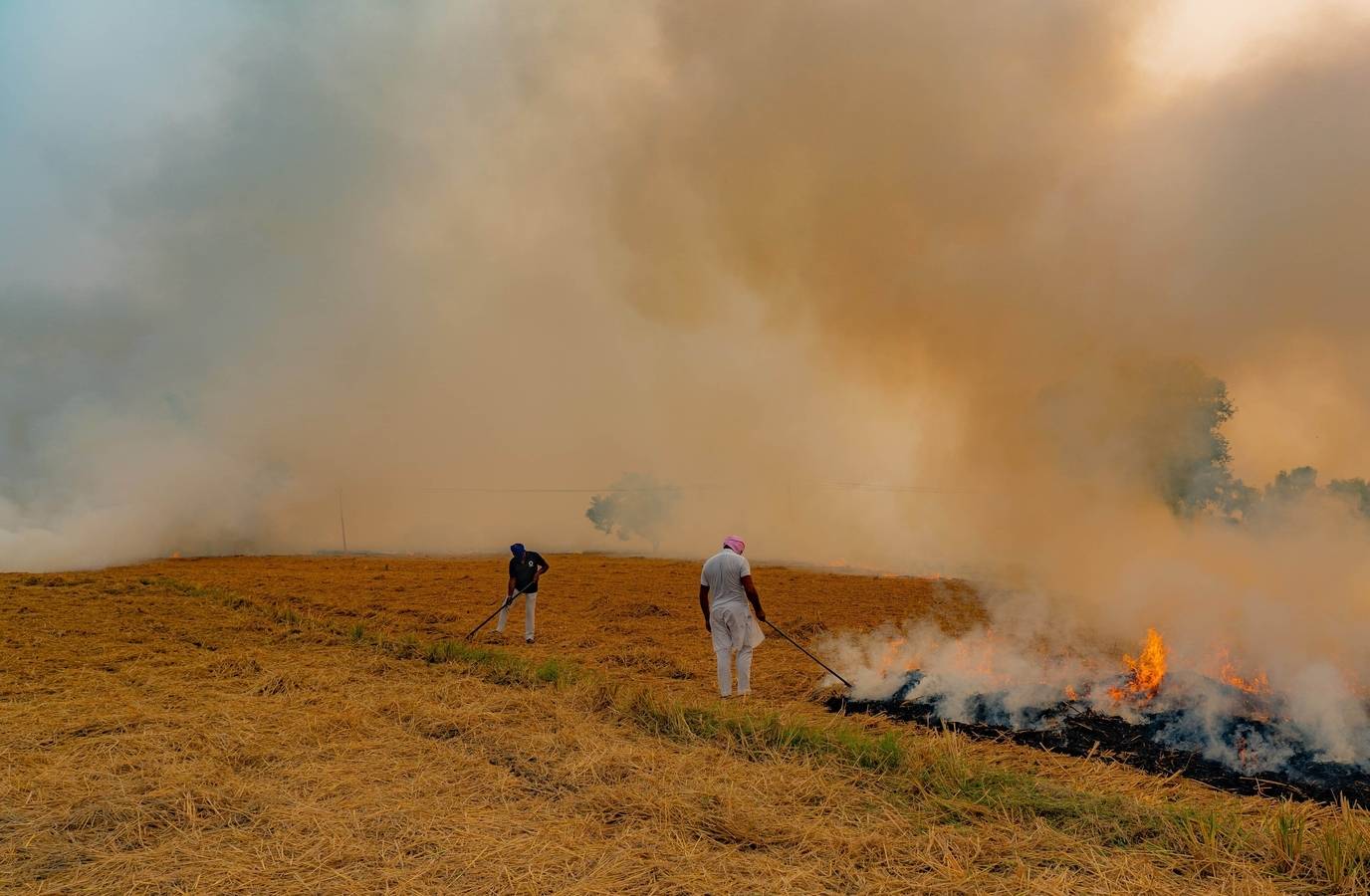
Amarjit Sharma, a farmer from Faridkot, Punjab, stands out among his peers for not growing paddy on his farm, unlike the majority of farmers in North Indian states. In Shah Syed's documentary 'Stubble: The Farmer's Bane,' Sharma is featured as a minority of organic farmers in Punjab who don't burn the stubble of their crops after harvest.
The large-scale open burning of crop residue, also known as stubble, left after the rice harvest in North Indian states of Punjab, Haryana, and Uttar Pradesh, takes place during the onset of winter — from October to November. This phenomenon is a definitive propeller of the toxic air pollution levels that have worsened over the years in Delhi and its peripheries.
Syed's film offers a startling statistic towards the end of the film: Between October and November of 2022 and 2023, there was a 26% reduction in stubble burning, but pollution levels kept rising during these years.
The film delves into this phenomenon to present an eloquent perspective — the perspective of the farmer. Syed's documentary is an addition to a narrow but rich tradition of agro-documentaries, featuring multiple perspectives — farmers who choose to burn the stubble of their crops, farmers who embrace risk by not burning the stubble, agricultural experts, and activists.