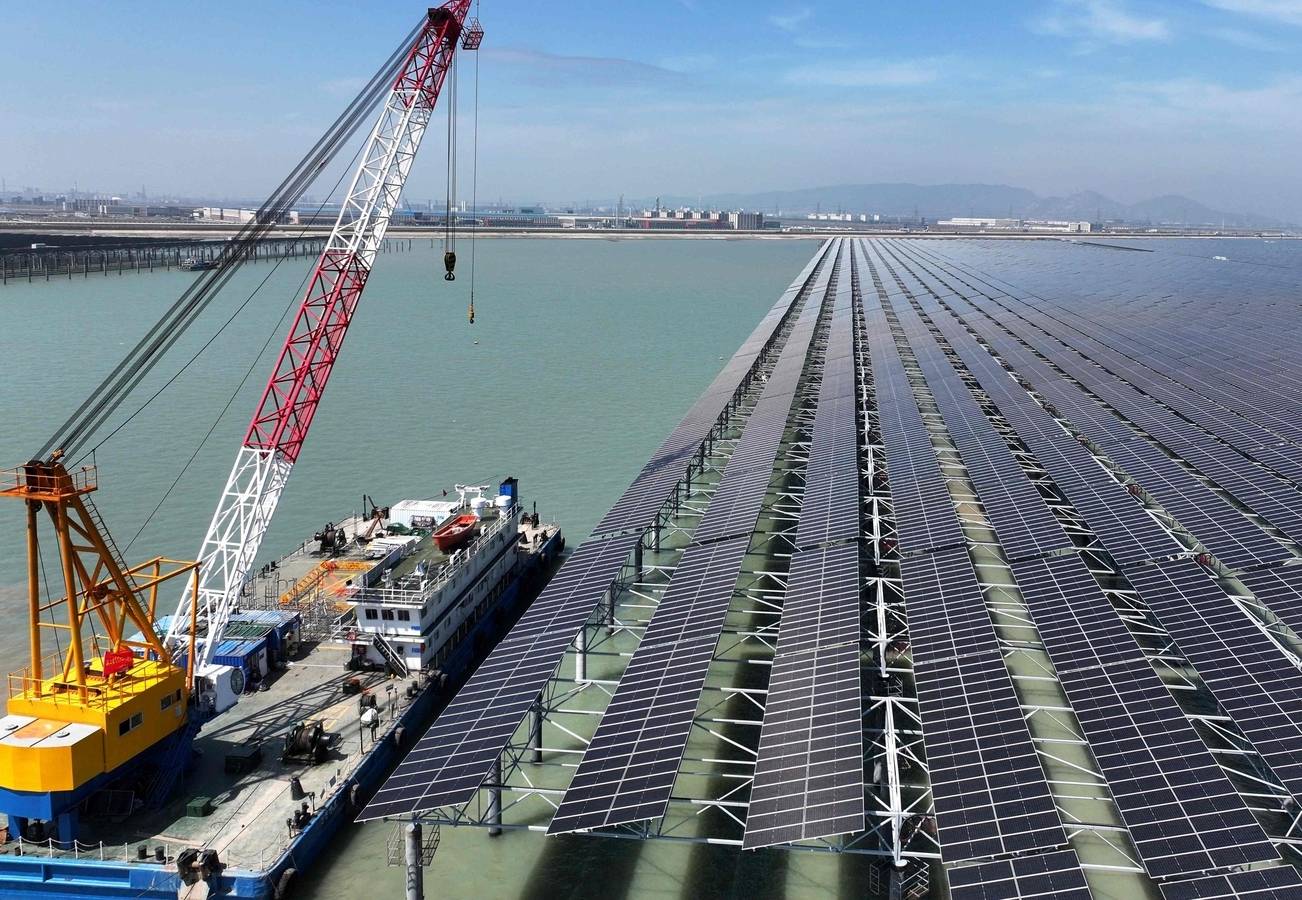
A decade ago, Jua Power, a family-owned solar-energy firm, had little reason to leave China in search of customers. With the country in the midst of a green-energy boom, “we had plenty of orders domestically,” recalls Xu Bo, its chief executive. But as China’s economy has slowed and profits in its solar industry have fallen, Mr Xu’s calculus has shifted.
In March 2025, he decided to build a factory in Tatu City, a special economic zone (SEZ) in Kenya. It is the firm’s first direct overseas investment in its nearly six-decade history.
Jua Power joins a growing wave of Chinese manufacturers who have recently landed in Kenya and other parts of Africa. In 2025, Chinese foreign direct investment in manufacturing in Africa surged to $12.3bn, spread across 64 new projects—the highest number in a single year in at least a decade, according to fDi Markets, a data provider.
Between 2023 and 2025, China invested more than America and Europe put together. Never before has Africa been so attractive to Chinese manufacturers, says John Mwendwa, the head of Kenya’s investment authority.
Chinese firms are attracted by Africa’s rapid population growth and improving economic prospects. Before the start of the Iran war in February, the IMF predicted for the first time in years that annual economic growth in sub-Saharan Africa would be faster than in the Asia-Pacific region.
But the main reason Chinese manufacturers are looking to Africa is trouble at home. “In China the manufacturing industry has reached a very critical turning point,” says Zhao Tongtao of Letol, an agricultural-machinery manufacturer which recently arrived in Tatu City.
Industrial profits in China remain low, despite some recent signs of recovery. Fierce price wars plague everything from cement and steel to electric cars and solar panels.
Africa offers the prospect of much higher returns. Charlie Yang, a Chinese entrepreneur who founded a medical-equipment factory in Kenya last year, says that prices there for items like plasters can be three to four times higher than back home.