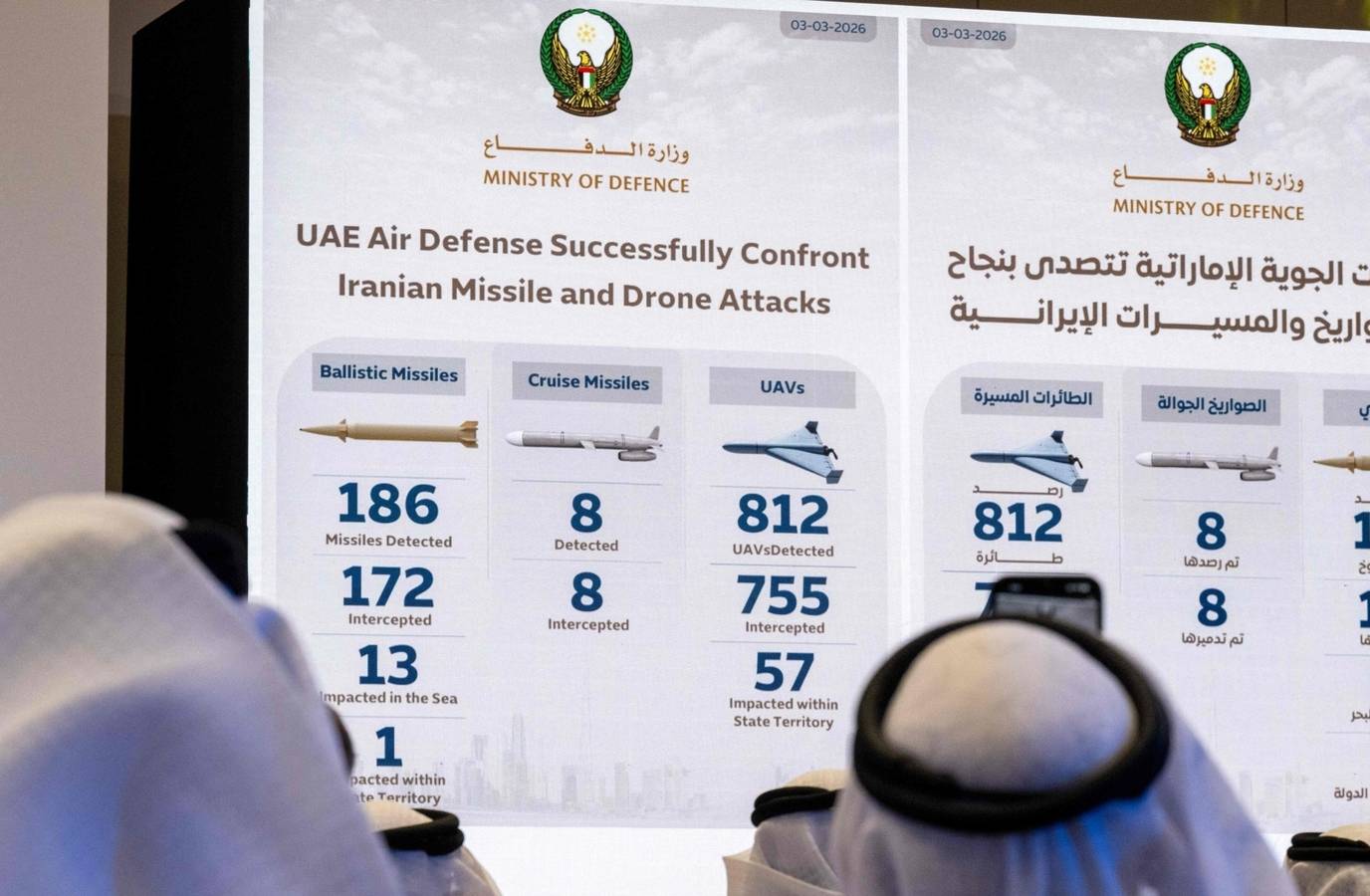
Caught in the war between the US-Israel and Iran, the United Arab Emirates (UAE) is facing consistent attacks from Iran on a daily basis, either via missiles or drones.
According to the UAE's Ministry of Defence (MoD UAE), there have been six deaths and 131 injuries among various nationalities in the UAE due to the war in the Middle East.
Since the conflict started, the UAE authorities have intercepted over 1,700 missile and drone attacks.
Air defence systems have helped keep life in the UAE running smoothly, despite occasional sounds of interceptions across the country.
The UAE's air defence system relies on advanced radar networks and sensing technologies that constantly monitor the skies for potential threats.
When a potential threat is detected, the information is immediately relayed to command centres, where advanced systems combine data from multiple sources to create a comprehensive operational picture.
The UAE has built a multi-layered air defence network, deploying different systems depending on the altitude and nature of the threat.
To counter high-altitude ballistic missiles, the country relies heavily on the US-made Terminal High Altitude Area Defense (THAAD) system.
The UAE operates several Patriot PAC-3 missile batteries for medium-altitude threats and the Russian-supplied Pantsir-S1 system for low-flying drones and aircraft.
More recently, the UAE strengthened this layered defence by acquiring South Korea's Cheongung II (M-SAM) system, a medium-range interceptor designed to target hostile aircraft and precision-guided munitions.