
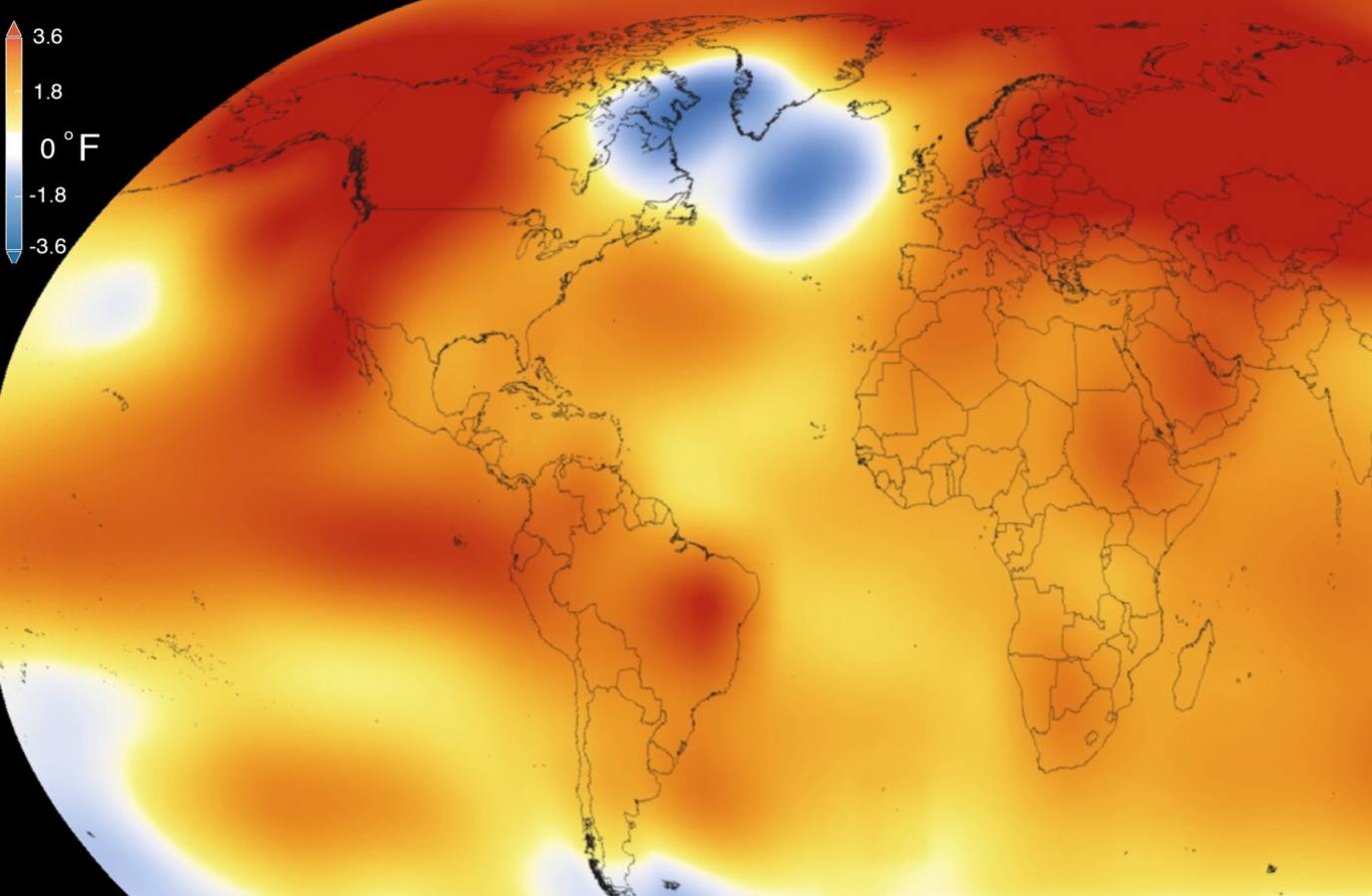
In 1751, Captain Henry Ellis of an English slave-trading ship recorded the first deep ocean temperature measurement, revealing icy cold waters at great depths. Fast forward to the present, a large patch of water in the North Atlantic Ocean has been cooling despite global warming. Known as the 'cold blob,' this phenomenon has puzzled scientists for decades.
Research suggests that the cold blob is linked to a weakening of the Atlantic Meridional Overturning Circulation (AMOC), a critical ocean current that regulates the European climate. A slowing conveyor belt means less heat is delivered to the region, resulting in a cooler patch of water.
Studies have shown that the cold blob is a symptom of a weakening AMOC, which could have severe consequences if it collapses. A 2023 study estimated that under current greenhouse gas emissions, AMOC is likely to collapse in this century, leading to changes in global weather patterns and potentially catastrophic effects on food security and ecosystems.
Scientists warn that a weakened AMOC could lead to accelerated melting of Antarctica's ice sheets, reduced ocean carbon absorption, and increased greenhouse gas emissions. The consequences of such an event would be far-reaching and devastating, making it essential to understand and address the underlying causes of the cold blob.