Sirens have been silenced in Feodosia, a resort town on the Crimean peninsula, as residents suspect authorities are more concerned with disrupting the tourist season than their safety.
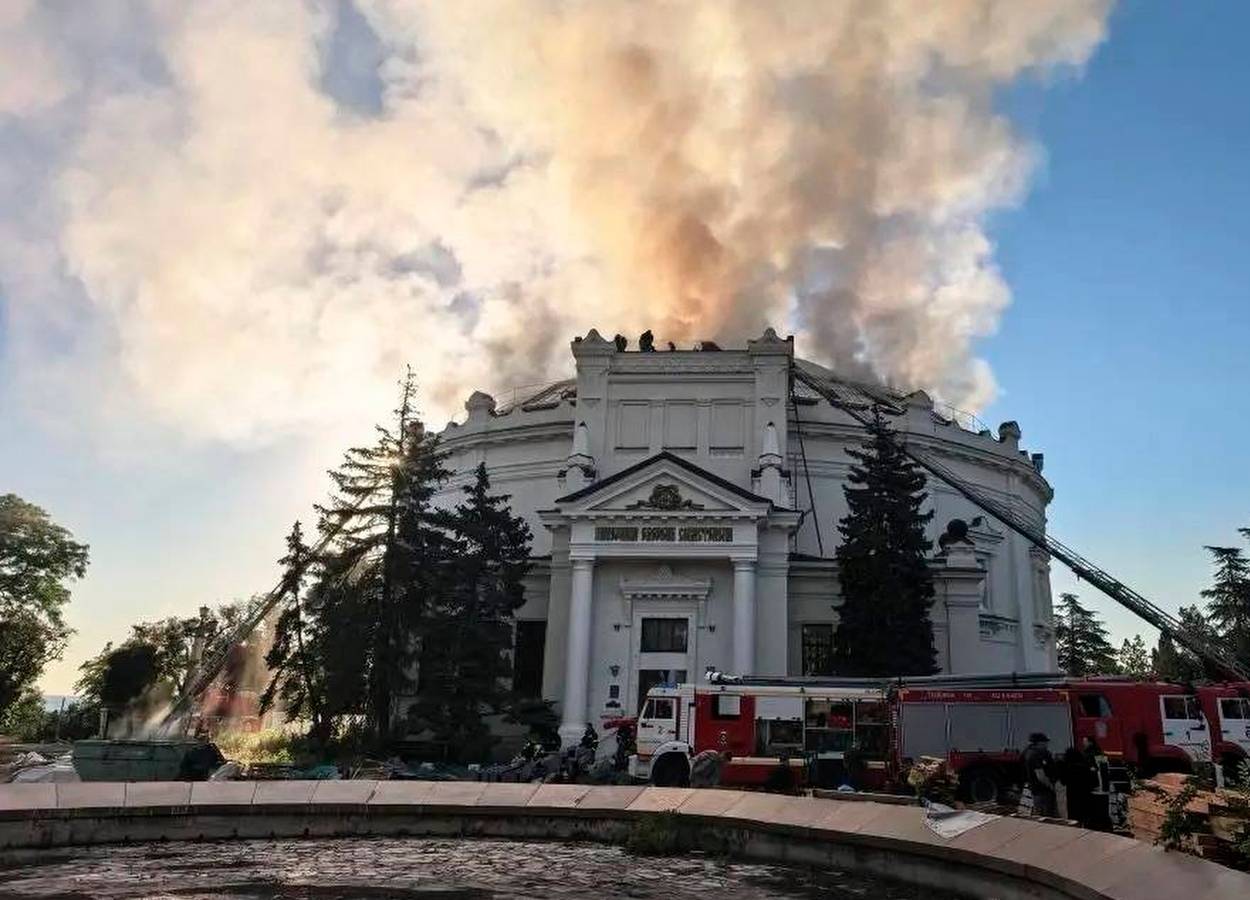
Crimea has been under constant attack for months, with military units, railway stations, and power plants being hit, and sometimes residential buildings as well.
Ukrainian drones have targeted power lines, oil terminals, and ferries, severing one of the peninsula's main arteries of supply.
Blackouts are increasingly frequent, and Crimea's governor has announced a temporary halt to fuel sales at all petrol stations.
Ukrainian drones have also brought the war deep into Russia itself, hitting refineries in Siberia and Moscow.
The attacks on Crimea are significant, as the peninsula serves as Russia's bridgehead and supply base for its army.
Crimeans have been deprived not just of petrol and electricity, but of their faith in the state's power to solve problems.
A local mother explains that ordinary people feel suddenly vulnerable, and her 14-year-old son wants to leave, but she tells him that as Crimean Tatars, they must remain.
While Sevastopol has emptied, Dzhankoi, a sleepy railway town, has boomed with military personnel using it as a staging point for the Kherson region.
Ukrainian attacks have undermined Crimeans' confidence in the army's ability to defend them, but there is no sign they have dented allegiance to Russia.
State counter-espionage propaganda is aggressive in Crimea, with residents seen as potential spies if they take photographs or ask questions in public.
Crimea is not the only place in Russia where frustration with the war is rising, with members of the country's ruling elite increasingly seeing it as a dead end.