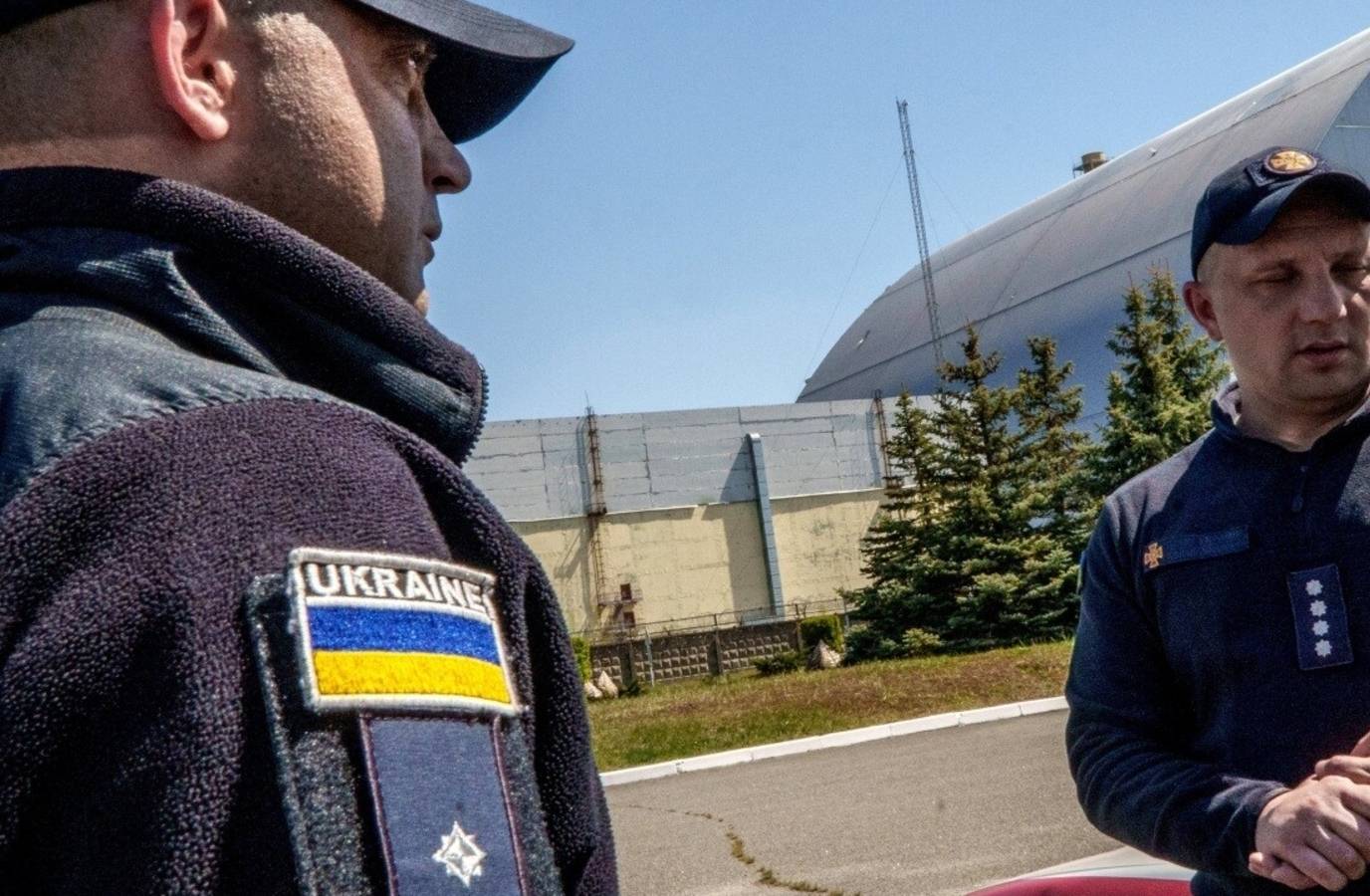
CHORNOBYL, Ukraine—Emergency workers at the Chornobyl Nuclear Power Plant faced a daunting task in February when a Russian explosive drone slammed into the confinement structure above Reactor No. 4.
Over the next two weeks, dozens of workers battled to put out a fire that spread through the membrane between the roof and the ceiling, working in shifts to limit radiation exposure.
The confinement has now been temporarily patched up, and Ukraine is asking its allies to help raise about $580 million for repairs that the European Bank for Reconstruction and Development says are needed to prevent irreversible corrosion and ensure the confinement can operate safely.
Ukraine's nuclear reactors have seen a number of dangerous standoffs throughout the war, as Russia's army has occupied power stations and turned them into military bases.
Russia occupied Chornobyl in the first weeks of the war before retreating from the Kyiv province, but the biggest threat to Chornobyl came from the skies, with Russia targeting Ukraine's power stations and energy grid.
Ukrainian officials have accused Russia of using threats to nuclear facilities as a way to scare and pressure the West over the war in Ukraine.
Since last July, Russia has focused some of its energy assaults on substations connected to Ukraine's nuclear power plants, according to the Ukrainian Prosecutor General's office.
The Chornobyl plant was fully shut down in 2000, but it remains a danger because of the 200 metric tons of highly radioactive material under the original concrete shelter.
A new structure costing $1.75 billion was built over the site in 2019 that is able to withstand tornadoes and forest fires, and was created so that the original 'sarcophagus' below could be slowly be dismantled.
Ukraine is now facing another winter that could bring additional devastation to its grid, with war risks remaining as a constant threat.