The Bharatiya Janata Party's (BJP) politics and worldview are often seen as antithetical to India's constitutional framework. The party has been accused of consistently undermining democratic institutions. The government has denied these allegations, pointing out that things have been bad in the past, including the Emergency.
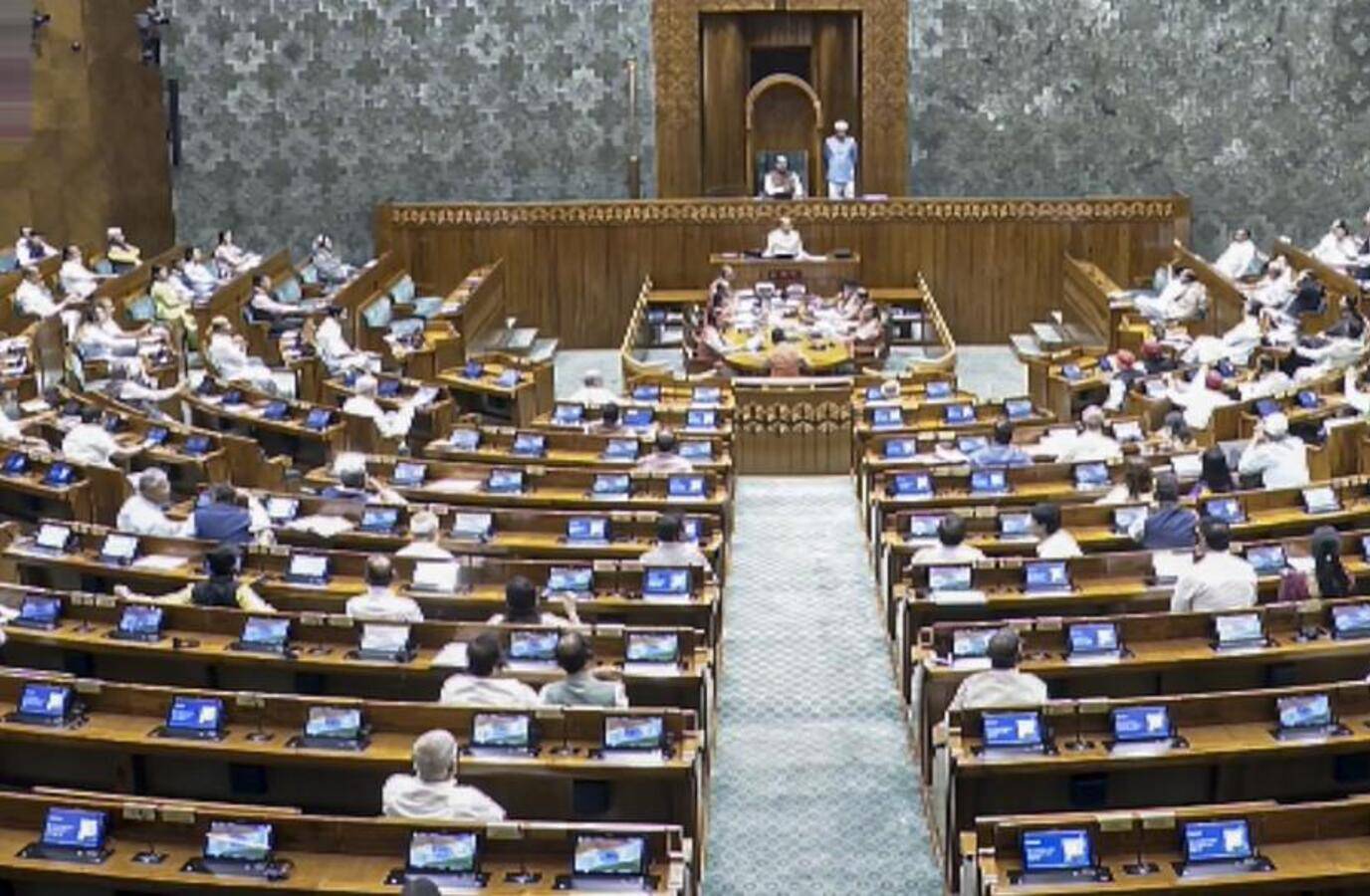
The current debate in parliament is centered around clubbing women's reservation with intra-state delimitation or gerrymandering. This move is seen as a desperate attempt by the government to compensate for lack of material attribution with metaphysical attribution for women's reservation.
The BJP's 2014 victory under Narendra Modi was historic, but the party's narrative had run into rough weather by 2019. The Modi government drew the right lessons and announced retrospective cash transfer for farmers in the pre-election budget. However, the government's luck ran out on the exogenous shock front, including a pandemic and a war in Europe.
The government's populist bargain of giving cash transfers and taking votes has created a problem for the government ahead of 2029. The state-level fiscal burden of this bargain is threatening to overwhelm India's debt management. Economic conditions are headed into a perfect storm, with AI disruption, energy shocks, and the US's behavior continuously stressing the Indian economy.
The central government has the unenviable task of taking attribution for bad things, such as the fuel price hike. The government's recent events, including the ongoing legislative agenda, need to be seen under the backdrop of this larger question.
The government is hoping to make the rollout of women's reservation not a bipartisan but a partisan achievement by clubbing it with delimitation and leaving assurances of keeping the parliamentary share of southern states intact outside the text. This may be cynical politics, but it's not the first time in India's history.
Delimitation is not the only ploy to game the first-past-the-post system in a polity divided on ethnic and caste lines. Multiple caste-based coalitions have targeted similar ends in the past. The fragmented nature of our polity has had many governments enjoy power with much lower vote shares than the BJP or many non-BJP governments have today in states.