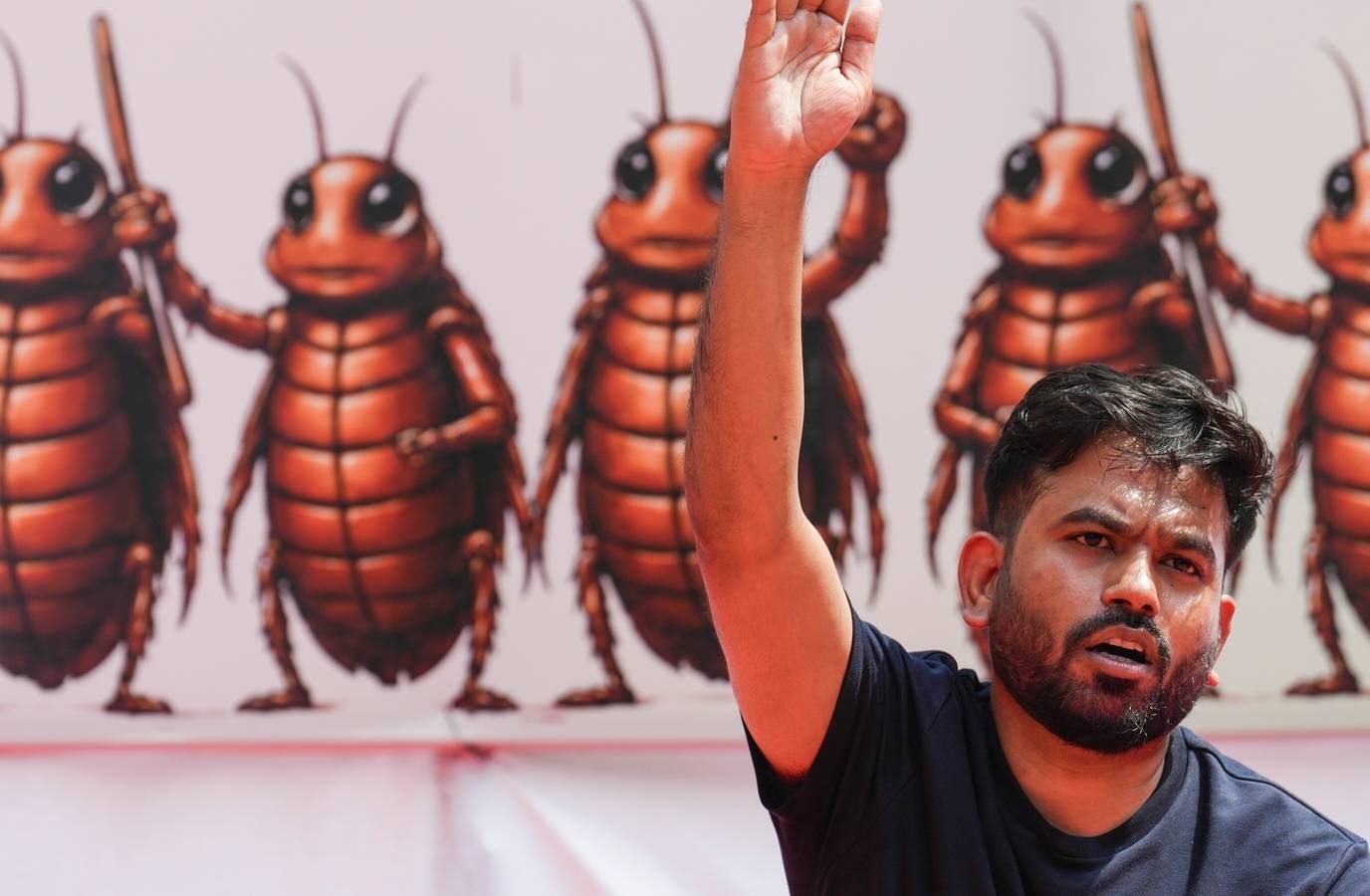
The Cockroach Janta Party (CJP) has rapidly grown from a social media campaign into a visible presence on the streets, but its future remains uncertain. The movement, centered on demands for Union education minister Dharmendra Pradhan's resignation over examination-related controversies, has attracted a sizeable following online and organised demonstrations around issues such as examination integrity, alleged paper leaks, and recruitment-related concerns.
However, sustaining momentum and expanding its agenda beyond examinations and paper leaks poses a significant challenge. Social media can help build visibility quickly, but sustaining a movement often requires structures, leadership networks, and long-term goals that extend beyond digital engagement.
The CJP's founder, Abhijeet Dipke, has been a key figure in the movement, but his prominence raises questions about whether the organisation can develop beyond a single leader. The call for district-level "Jail Bharo" protests is an attempt to decentralise the movement and encourage local mobilisation, but it remains to be seen whether supporters will take up this call.
As the movement faces the challenge of what happens if the immediate demand is not met, supporters insist that the campaign cannot end there. The issue extends beyond any one minister, and the government's handling of the examination process has sparked widespread criticism.
For now, the CJP's future remains uncertain, and it will be interesting to see whether the movement can sustain momentum beyond the NEET controversy fades.