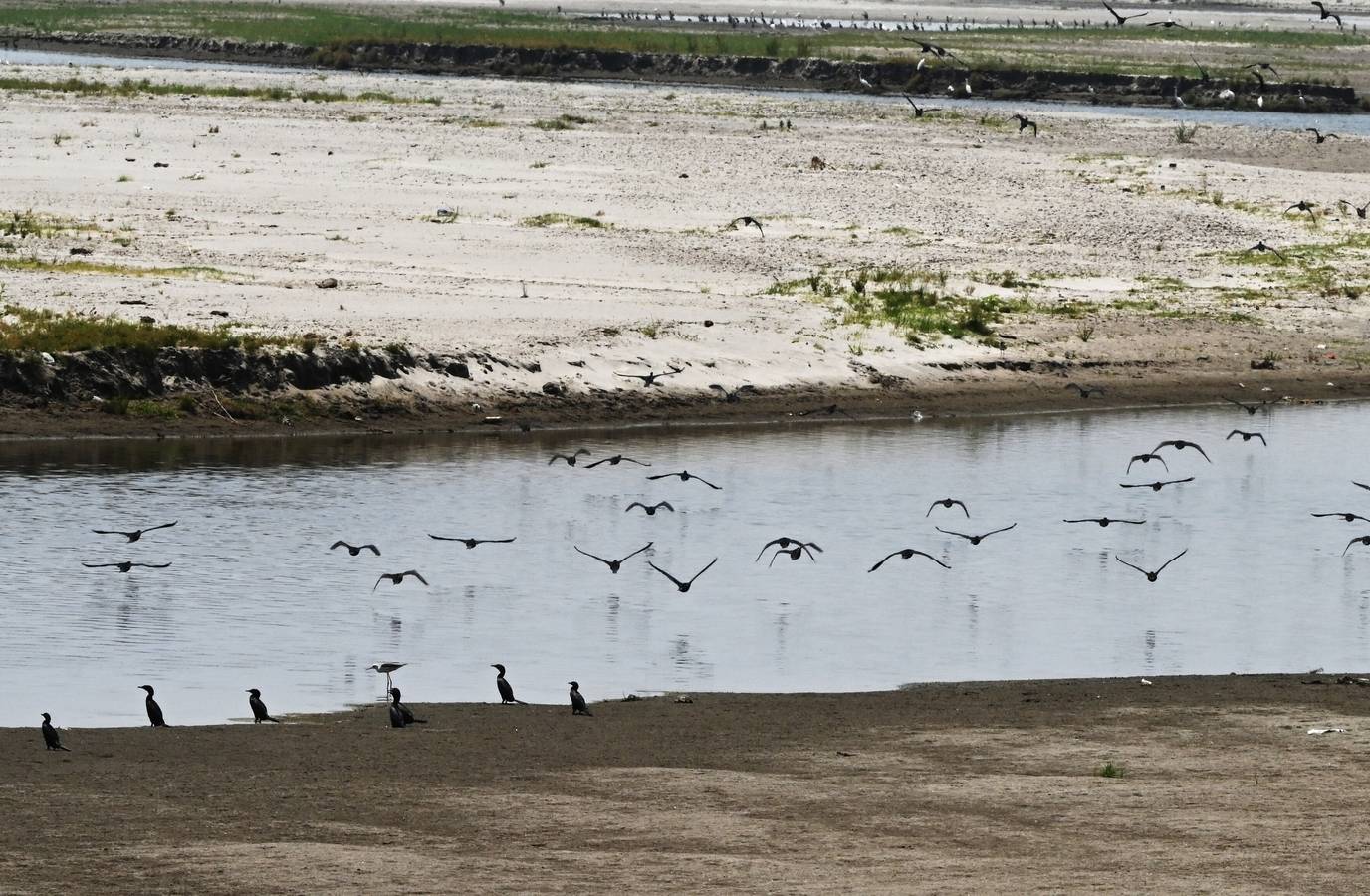
A severe water crisis is gripping Delhi, with the Yamuna river at a record low, forcing two major treatment plants to reduce capacity and leaving thousands without access to clean water.
The Wazirabad pond, which supplies water to the Wazirabad and Chandrawal treatment plants, has dropped to 668.6 feet above sea level, five feet below the operational threshold.
The crisis is a result of the summer heat, but Delhi has long struggled with a chronic mismatch between its water supply infrastructure and burgeoning demand.
The city's water supply falls short of its needs, with a demand of 1,380 million gallons per day, but only 1,000 million gallons available.
Residents in affected colonies have reported receiving no water for days or receiving supply unfit for use, with demand for water tankers outstripping availability.
Efforts are being made to avert the crisis, including diverting raw water from the Munak canal and releasing additional Yamuna water from Haryana.
However, experts point to longstanding problems, including Delhi's dependence on Haryana for 40% of its Yamuna-based raw water and the deterioration of the Yamuna's carrying capacity due to siltation, floodplain encroachment, and concretisation.
Until upstream flow is secured and the river's carrying capacity is restored, the Wazirabad barrage will remain the point at which Delhi's water problem becomes visible – every year, on schedule.