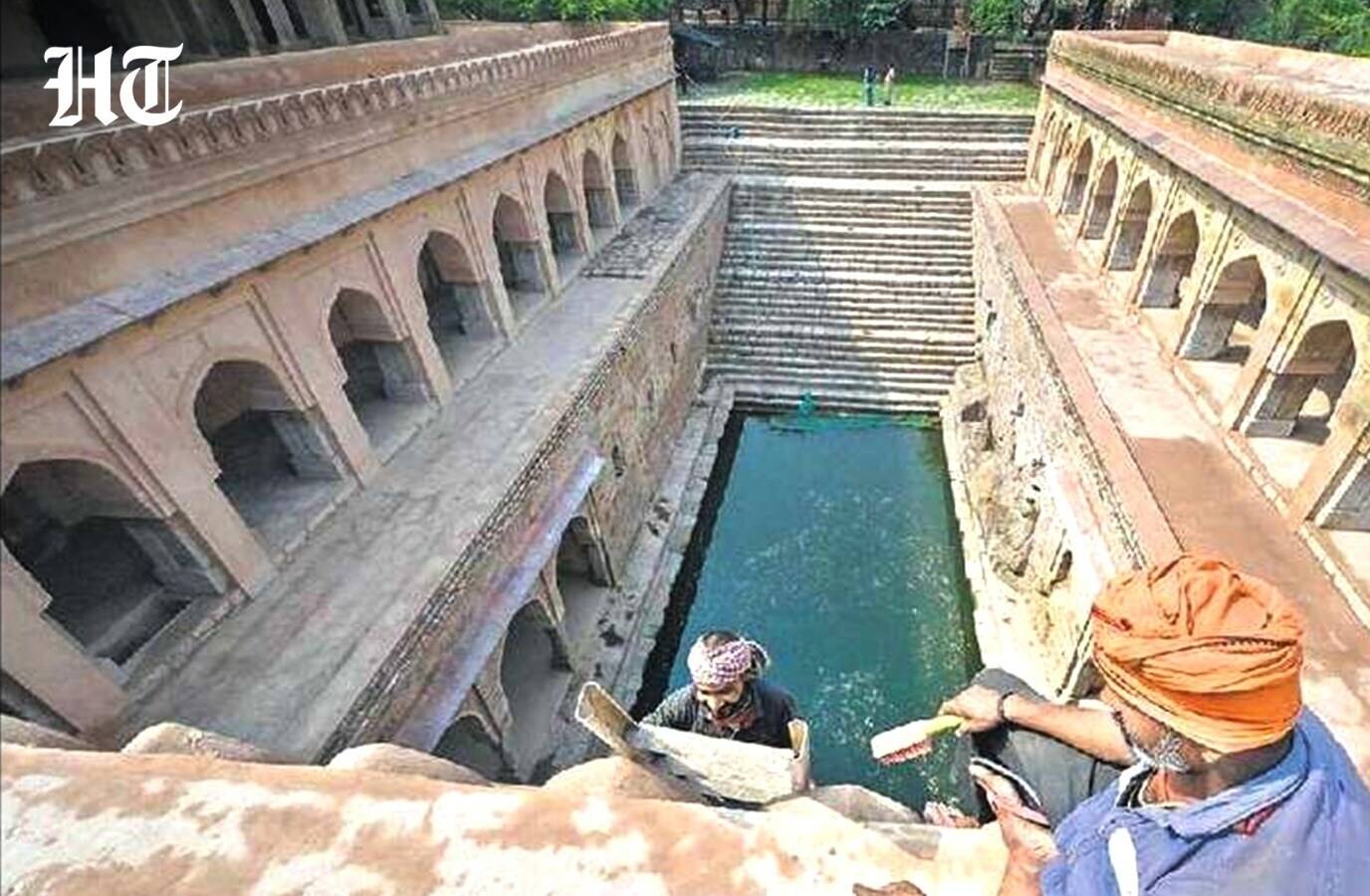
A quiet movement is underway across India to revive centuries-old stepwells, temple ponds, and underground tankas to help cities cope with a deepening urban water crisis.
Architect Kalpana Ramesh has been at the forefront of this shift in Telangana, helping to revive over 30 stepwells as sustainable local water sources.
Her team cleared thousands of tonnes of waste from the 17th-century Bansilalpet stepwell in Secunderabad, which is now one of the city's most vibrant public spaces.
The restored stepwell holds water through the year and is used by local residents for drinking and domestic needs.
The World Monuments Fund India is leading the Historic Water Systems of India initiative, which identifies, restores, and reactivates traditional water structures.
Experts say that traditional structures like stepwells can significantly supplement a city's water demand if revived properly, but their role is supportive rather than decisive.
Reviving these systems comes with challenges, including mapping underground water flow and ensuring water quality.