
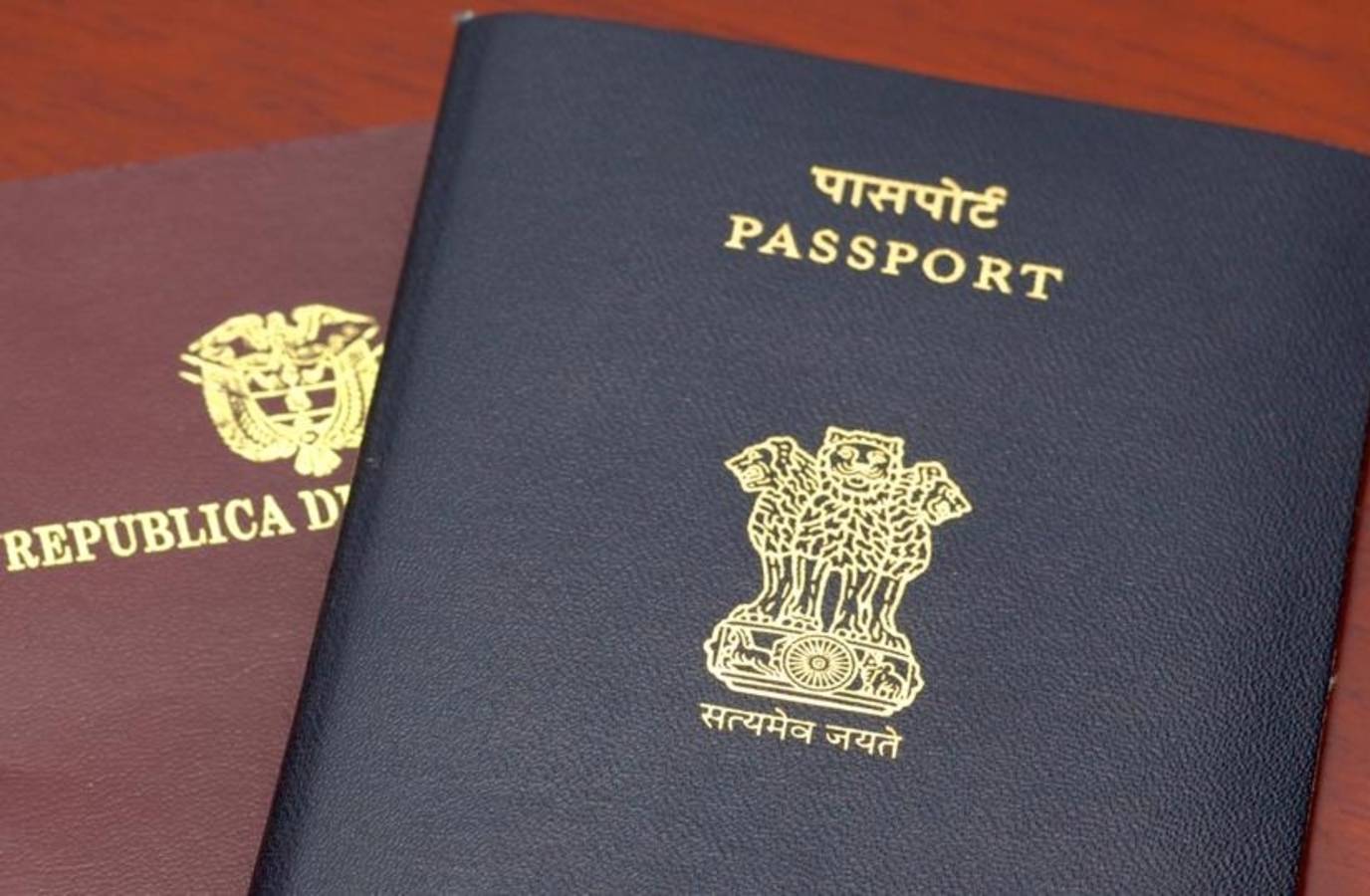
A passport may get you across international borders, but it's not proof of citizenship in India, according to the external affairs ministry. So, what documents do prove citizenship? The answer is complex, and it's a question that has been revived amid recent controversies over electoral roll revisions and citizenship verification exercises.
The Passports Act, 1967, governs passports, but it doesn't make a passport conclusive proof of citizenship. In fact, the law contemplates that a passport is issued only after the state has satisfied itself about the applicant's citizenship. This raises an obvious question: if a document issued by the sovereign after extensive verification is insufficient, what documents can prove citizenship?
The voter ID precedent is a good example. A voter identity card establishes that a person is enrolled as an elector, but it doesn't independently establish citizenship. This follows from the scheme of the Representation of the People Act, 1950, under which only citizens can be registered as voters.
So, what does Indian law say? The answer is complex. Unlike many countries, India does not possess a single universally recognised citizenship certificate automatically issued to every citizen at birth. The government's own position reflects this complexity, saying that acquisition and determination of citizenship are governed by the Citizenship Act, 1955 and the rules framed under it.
Citizenship in India flows from the Constitution and the Citizenship Act, 1955. A person's status may arise through birth, descent, registration, naturalisation or incorporation of territory. Consequently, proof of citizenship often depends on the route through which citizenship is claimed. For some individuals, a birth certificate may be the primary document. Others may rely on passports, citizenship certificates issued upon registration or naturalisation, parental records, electoral records, school certificates or a combination of documents establishing lineage and residence.
Courts generally examine the totality of evidence rather than treating a single document as universally conclusive. A passport may be strong evidence that the state has accepted a person's claim of citizenship. A voter card may indicate that electoral authorities considered the person eligible to be enrolled as a citizen-voter. A birth certificate may establish birth in India but not necessarily answer every question relating to citizenship under the evolving statutory framework.
Each document proves a fact; none necessarily settles the citizenship question in every case. That is what makes the external affairs ministry's recent clarification noteworthy. If neither a passport nor a voter identity card can conclusively establish citizenship, the burden often shifts to a mosaic of documents and circumstances — an approach that may be legally defensible but can leave ordinary citizens uncertain about what evidence ultimately suffices to prove that they belong.
Can there be one definitive document? The short answer is no. India has never adopted a national citizenship card. Aadhaar expressly does not establish citizenship. The law governing Aadhaar permits enrolment of residents and not merely citizens and the Act's provision mandates that it is not a proof of citizenship.
The only document specifically certifying citizenship is a citizenship certificate issued under the Citizenship Act, but such certificates are relevant only for those who acquired citizenship through registration or naturalisation and not for the overwhelming majority of Indians who are citizens by birth.
The controversy highlights a structural feature of Indian citizenship law. India's legal system has historically operated on a presumption that most people are citizens unless a specific dispute arises. Citizenship is therefore inferred from a raft of records rather than established through a single foundational document.