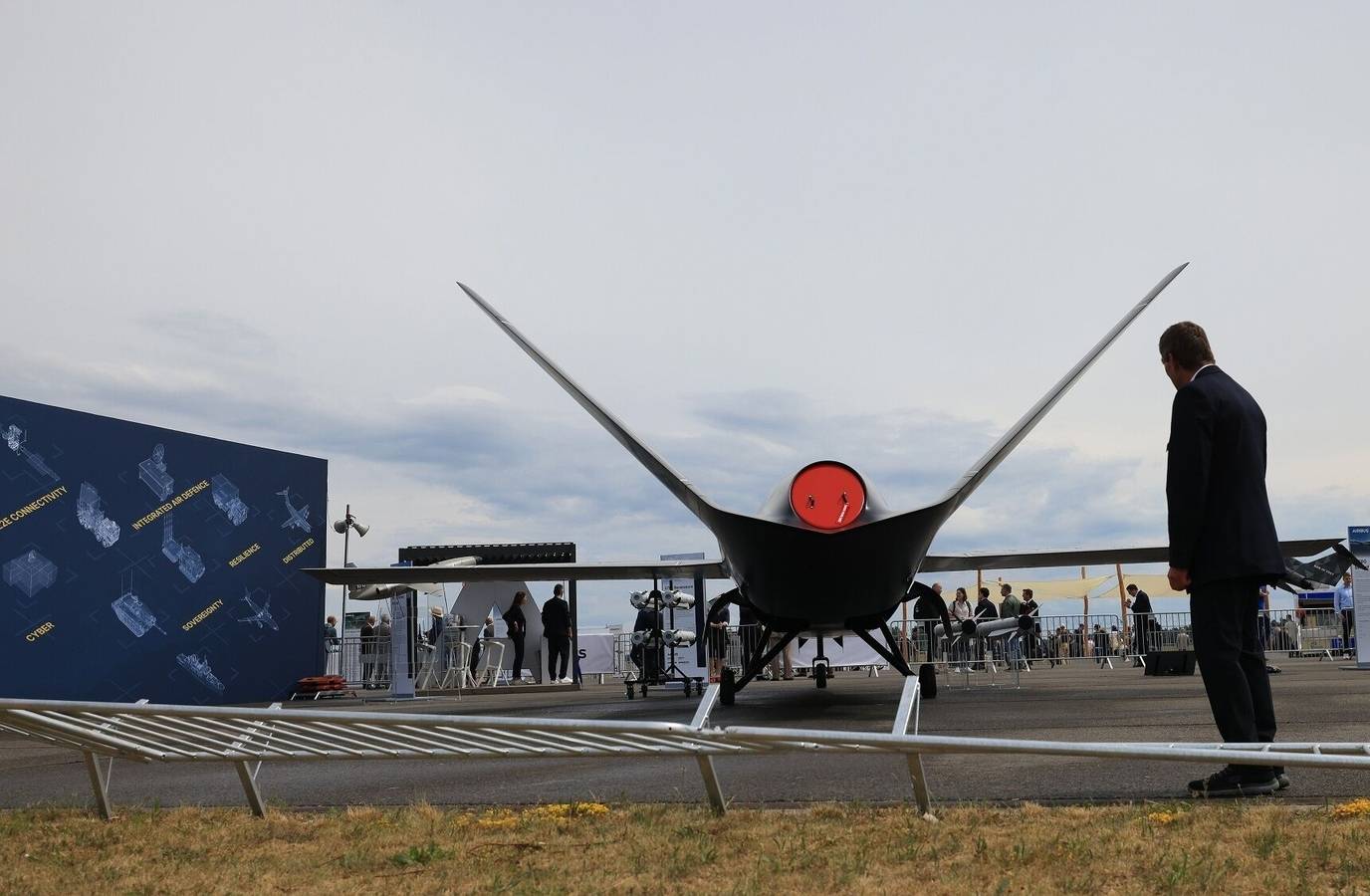
The Indian Army's induction of 106 Agniveg turbojet-powered kamikaze drones and the Indian Air Force's move towards indigenous production of similar weapons have put the spotlight on loitering munitions.
Loitering munitions are cheap and precise unmanned aerial vehicles (UAVs) that have reshaped modern warfare.
The term kamikaze has its origins in the Second World War, when Japan designated pilots to fly their aircraft directly into Allied ships in what were called suicide missions.
Today, kamikaze drones identify their targets and then crash into them or destroy them, offering two tactical advantages: they can respond fast without requiring high-value military assets, and they are cheaper, reducing losses in combat.
Launched in swarms, these drones can overwhelm an enemy's defence systems, making them a game-changer in modern warfare.
India's Agniveg, manufactured by domestic firm SMPP, is designed to strike high-value targets deep inside enemy territory, with a turbojet engine giving it both reach and speed.
The Agniveg's operational range is 180 kilometres, making it a powerful addition to India's military arsenal.