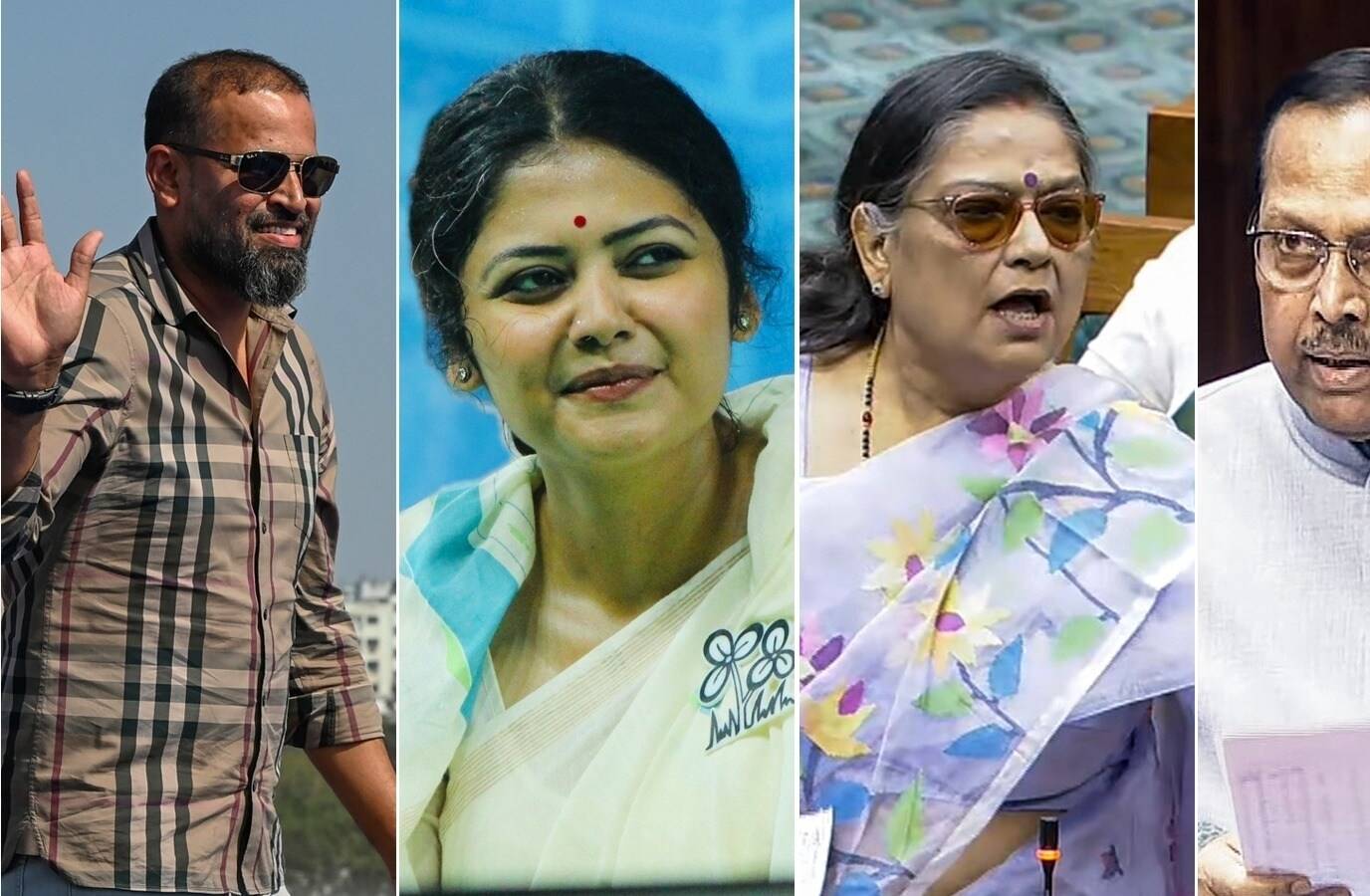
Political rebellions are rarely about numbers in the beginning. They are about signals. For Mamata Banerjee, the most troubling aspect of the unrest within the Trinamool Congress is not the exact size of the dissident camp. It is the profile of those who have chosen to break ranks.
The names being associated with the rebellion come from vastly different corners of the party - a veteran parliamentarian who has stood by the leadership for years, a youth icon nurtured by the organisation, a celebrity recruit who delivered one of the party's biggest electoral victories in 2024, and a nationally recognised political heavyweight brought in to expand the TMC's footprint beyond Bengal.
Taken together, they suggest that the dissatisfaction is neither ideological nor generational. It cuts across the party's internal factions.
The emerging picture is striking. Sukhendu Sekhar Ray represents the institutional core of the party. Saayoni Ghosh represents its future leadership. Yusuf Pathan embodies its newer social and electoral experiments. Shatrughan Sinha reflects its national ambitions.
These leaders share little in common politically or socially. Yet their names are appearing in the same conversation. That is what makes the current turbulence different from previous bouts of dissent within the Trinamool Congress.
For nearly three decades, Mamata Banerjee's greatest political strength has been her ability to keep disparate interests united under a single umbrella. The present revolt suggests that strains are beginning to appear across multiple layers of that coalition at the same time.
Whether the rebellion ultimately fizzles out or develops into a more organised challenge remains uncertain. But in politics, perception often matters before numbers do. And right now, the perception confronting the Trinamool leadership is that dissatisfaction is no longer confined to a faction. It has acquired faces that the party itself helped create.