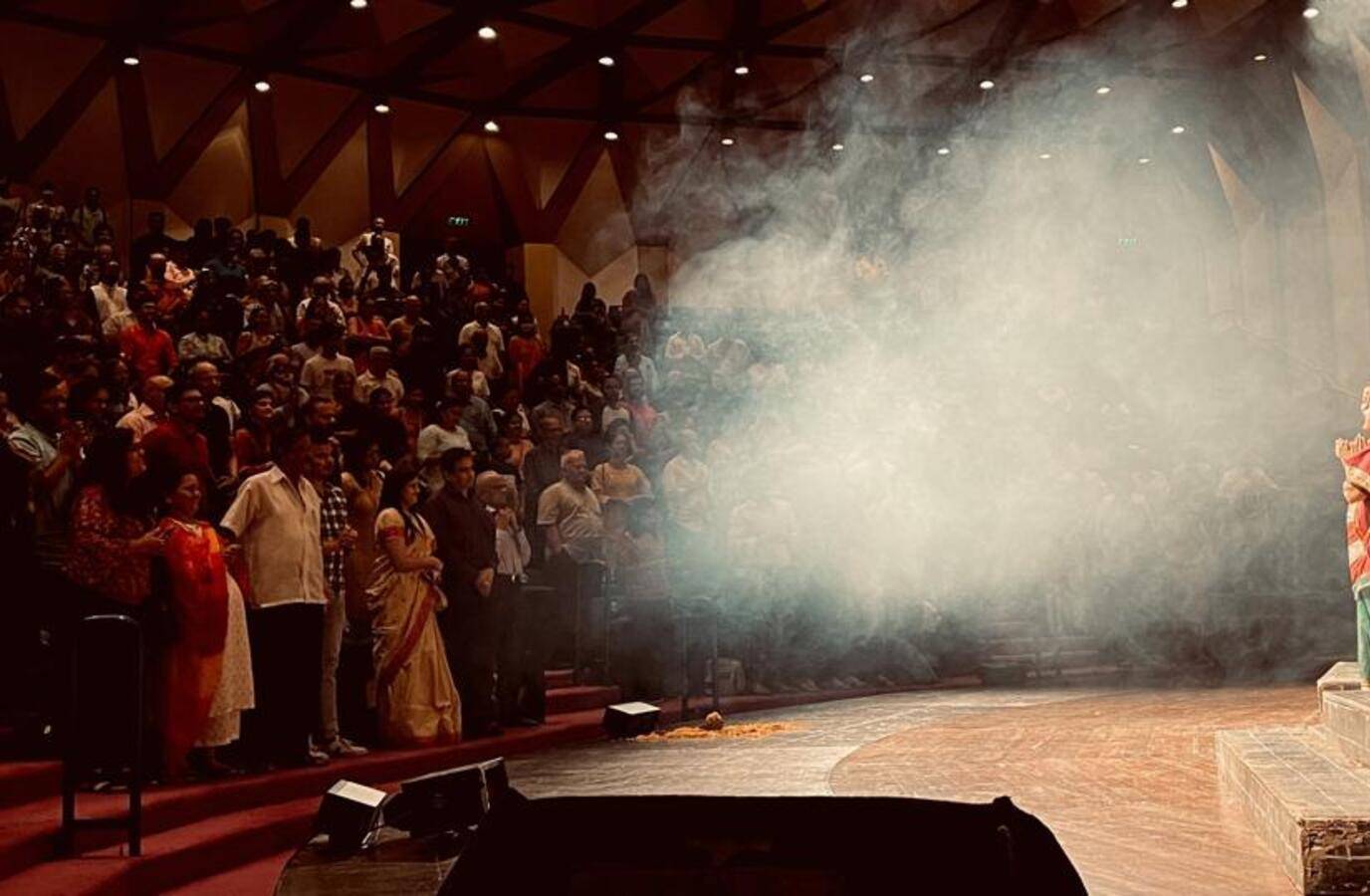
Two Marathi plays, 'Shivaji Underground in Bhimnagar Mohalla' and 'Sangeet Devbhabhli', have defied the status quo in the Marathi theatre landscape by demanding an awakening and not just entertainment. 'Shivaji Underground' is a polemical interrogation of history, while 'Sangeet Devbhabhli' is a musical inquiry into the lives of two women left behind by the march of saintly men.
'Shivaji Underground in Bhimnagar Mohalla' is a subversive play that opens the trappings of a traditional gondhal only to be interrupted by a character who declares that the audience is weary of the old myths. The play says there are many myths about Shivaji which have been popularised to garner support for their ideology.
'Sangeet Devbhabhli', directed by Prajakta Deshmukh, is a quiet, soulful interior that looks at the woman behind the saint. The play centres on the encounter between Avali, the wife of the poet-saint Tukaram, and Rakhubai, the consort of Lord Vitthal.
Both plays share a singular objective: to strip away the veneer of sanctity and remind us that theatre is for life, not the other way around.