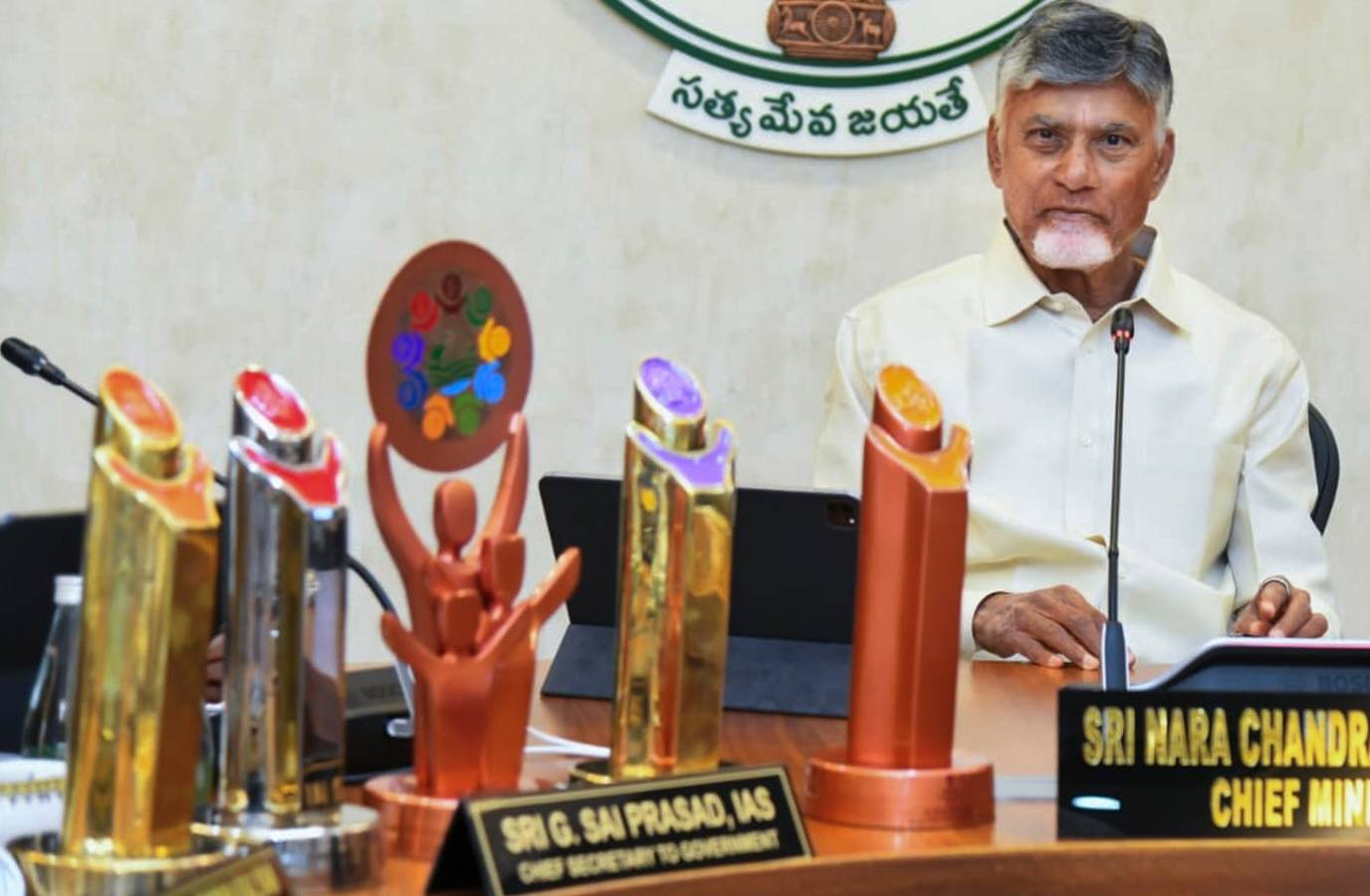
Andhra Pradesh Chief Minister N Chandrababu Naidu has completed two years in office, with his coalition government still struggling to revive the state's economy while implementing its welfare agenda.
The coalition government, comprising the Telugu Desam Party (TDP), JanaSena Party, and Bharatiya Janata Party (BJP), secured a historic victory in the 2019 assembly elections, winning 164 of the 175 assembly seats and 21 of the 25 Lok Sabha seats.
Naidu has claimed to have achieved economic revival, infrastructure expansion, and technology-driven governance, saying the government has brought the state from 'destruction' to the path of 'development.'
However, the opposition YSRCP has launched statewide protests, alleging that Naidu has failed to deliver on election promises even after completing two years in office.
The Naidu administration has focused on restoring investor confidence and positioning Andhra Pradesh as a preferred investment destination, attracting investments worth ₹23 lakh crore in the past two years.
The government has also claimed to have recorded a Gross State Domestic Product (GSDP) growth rate of 11.28% during the second quarter, outperforming the national average.
Naidu has set a three-year target for completing major government infrastructure in the capital city of Amaravati, which has seen renewed momentum after years of uncertainty.
The government has also focused on long-pending infrastructure projects across the state, including the Polavaram irrigation project, Bhogapuram International Airport, and national highways.
While pursuing industrial growth, the government has simultaneously expanded welfare programmes under its 'Super Six' framework, benefiting millions of pensioners, farmers, and students.
However, political analyst Ramu Suravajjula said Naidu's claims on implementation of his welfare schemes do not reflect the reality, as people are largely disappointed with the government's performance.