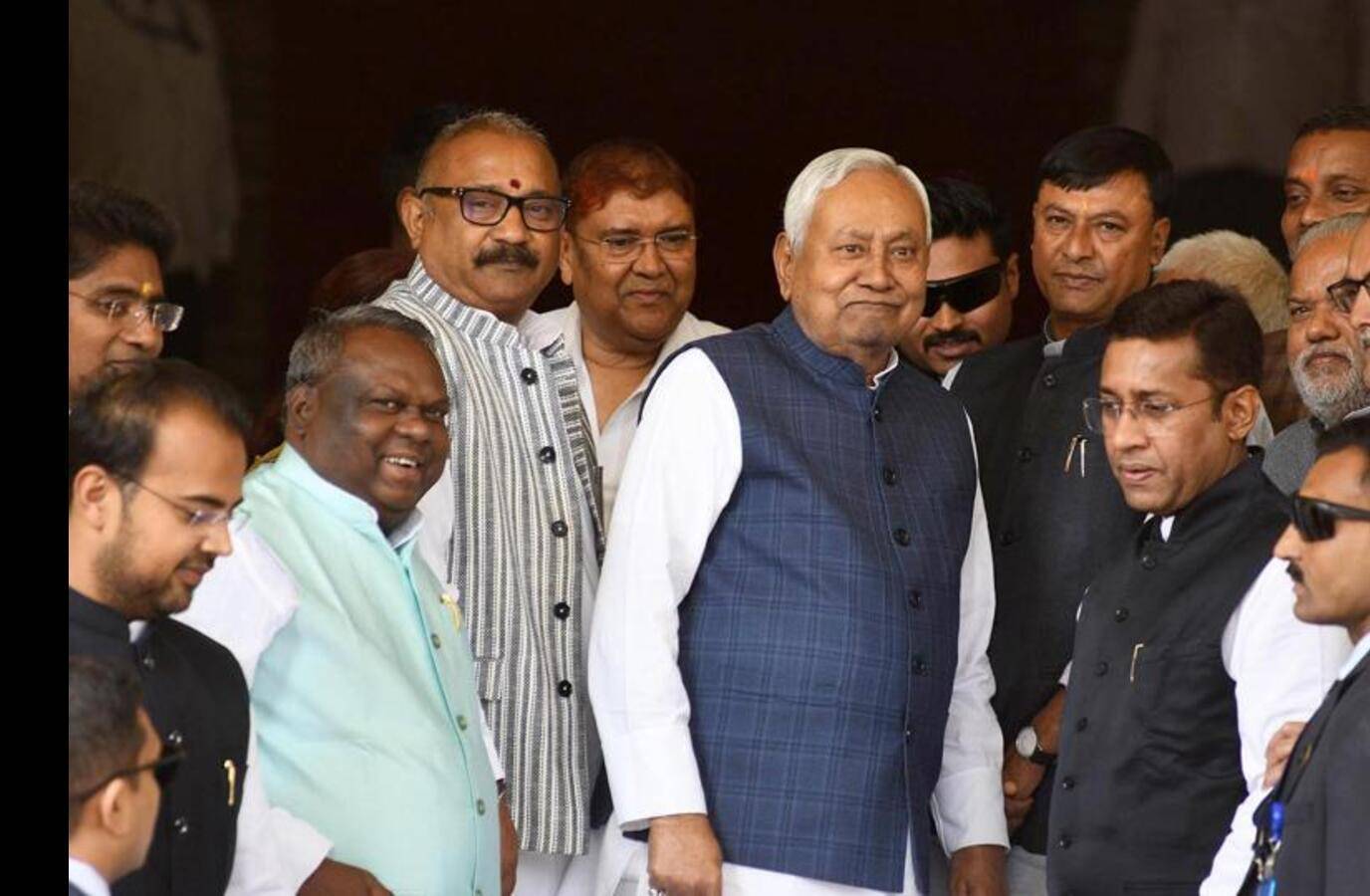
Nitish Kumar, 75, has announced his candidature for the Rajya Sabha as a Janata Dal (United) nominee, sparking speculation over who will replace him as the Bihar chief minister.
Kumar expressed gratitude to the people of Bihar for trusting him for over 20 years, saying their support enabled him to serve the state with dedication.
He reassured people that his relationship with them would remain unchanged despite the move and would continue working with the people to fulfill the goal of building a developed Bihar.
Kumar's shift to Delhi could reshape the ruling National Democratic Alliance (NDA) in the state, with the Bharatiya Janata Party (BJP) widely expected to get the chief minister's post.
The BJP is expected to balance multiple factors while choosing Kumar's successor, including caste representation, coalition stability, and the broader political message the party wants to send.
Caste dynamics continue to play a decisive role in Bihar's politics, and any leadership change will take that into account, with Extremely Backward Classes (EBC) being among the most influential social groups in the state.
Political strategists believe that the next chief minister will come from a social background that reassures this important voter base and helps maintain the coalition's social cohesion.
The BJP is expected to factor in both caste arithmetic and expectations of women voters while picking its chief ministerial candidate, as women's participation increased significantly in the 2025 election.