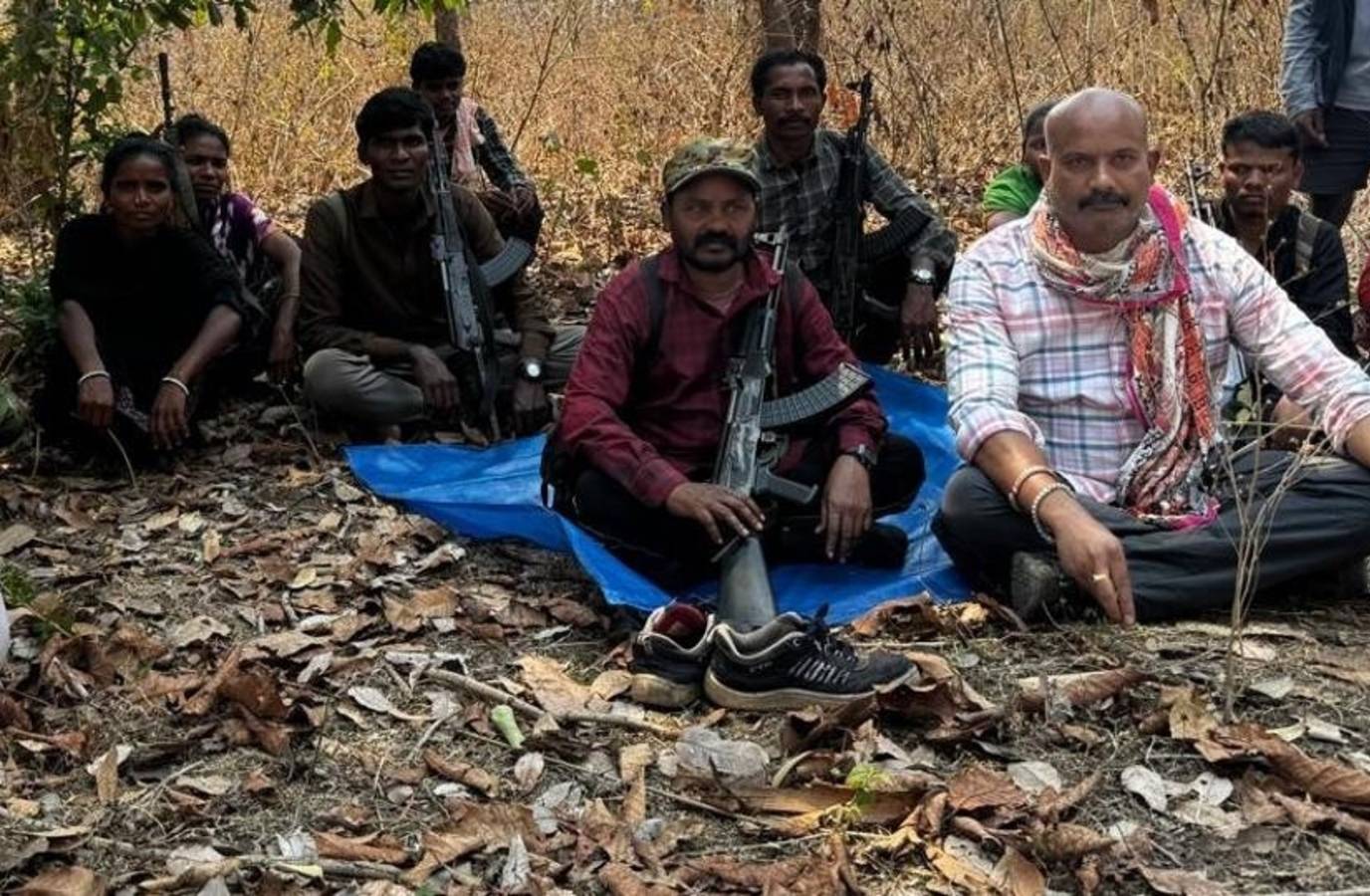
The surrender of senior Maoist commander Paparao alias Mangu in Bastar marks a significant turning point in the region's history, reflecting the steady erosion of Left-Wing Extremism in a once-nerve centre of the insurgency.
For over two decades, Paparao operated deep inside the Indravati–Abujhmad forests as a key leader of the Communist Party of India (Maoist), orchestrating attacks on security forces and sustaining the group’s operational network.
His decision to lay down arms now mirrors a broader shift in Chhattisgarh, where sustained security operations, development initiatives and rehabilitation programmes have significantly weakened the Maoist movement.
Government data indicates that the number of active Maoist cadres in Chhattisgarh has fallen sharply from around 1,600 in 2025 to about 100 as of March, 2026.
The surge in surrenders is one of the clearest indicators of the weakening insurgency, with thousands of Maoist cadres abandoning the movement over the past decade.
A coordinated multi-pronged strategy pursued by both the Union and state governments has driven this transformation, including security operations, development and welfare initiatives, and rehabilitation policies.
Programmes such as the Aspirational Districts Programme, Pradhan Mantri Gram Sadak Yojana and Jal Jeevan Mission have improved connectivity, drinking water access and basic infrastructure in remote tribal areas.
Rehabilitation policies have also played a key role in encouraging cadres to surrender, with former Maoists receiving financial assistance, vocational training and support for reintegration into society.
Paparao’s surrender fits into this broader trajectory, further weakening an already fragile network and highlighting how sustained security operations, development initiatives, and rehabilitation policies have steadily eroded the insurgency.