Raghav Chadha compares PM Modi's political journey with Nehru's: 'A far more demanding democracy' | India News
PM Modi completed 4,399 consecutive days in office, overtaking Jawaharlal Nehru's record of 4,398 days as an elected Prime Minister. | India News
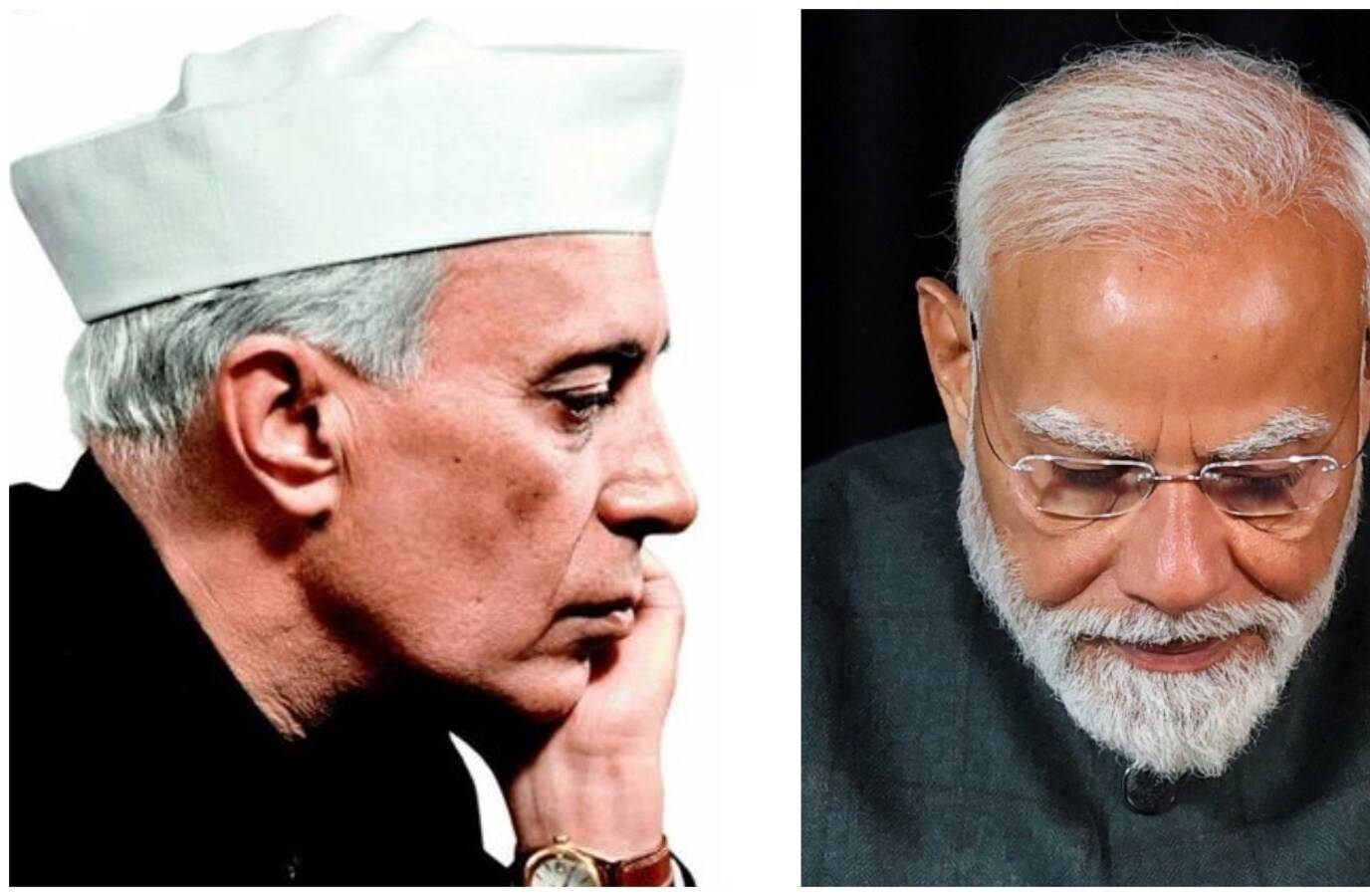
As Prime Minister Narendra Modi became India's longest continuously serving elected leader on Wednesday, BJP MP Raghav Chadha observed the milestone by comparing it with the country's first PM, Jawaharlal Nehru.Modi completed 4,399 consecutive days in office on June 10, overtaking Nehru's record of 4,398 days as an elected Prime Minister. While congratulating Modi, Chadha focused on what he described as the significance of securing three successive mandates in a vastly different political era.On X, Chadha said Modi's victories in 2014, 2019 and 2024 represented "three successive mandates from the people of India, each one a renewed act of faith."Raghav Chadha’s Modi vs Nehru comparisonDrawing a comparison with Nehru's tenure, Chadha argued that the two leaders operated in very different political environments. According to him, Nehru led India during the formative decades of the Republic when the Congress enjoyed overwhelming dominance and faced a relatively fragmented opposition.“Pandit Nehru ji earned his mandate in the formative decades of the Republic, an age of one-party dominance in which the Congress towered over a young and fragmented opposition,” Chadha wrote.He contrasted that with what he described as today's “far more” competitive political landscape, seen by coalition politics, powerful regional parties and intense electoral contests.“Narendra Modi ji has earned his in a far more demanding democracy: the age of coalitions, of powerful regional forces and fierce multi-party competition,” Chadha said.The BJP leader pointed out that Modi secured absolute majorities for the BJP in both 2014 and 2019, the first single-party majorities at the Centre since 1984, before leading the NDA to victory again in 2024."To command the trust of so fiercely contested a nation, mandate after mandate, is by any measure the harder achievement," Chadha wrote.“The same leader has been entrusted with the nation: again, and again, and again. 2014. 2019. 2024. Three successive mandates from the people of India, each one a renewed act of faith. To win the trust of so vast and diverse a nation even once is remarkable. To win it three times over, without a break, is extraordinary,” he said. Modi first assumed office on May 26, 2014, and has since led the country through three consecutive terms. “On this historic occasion, I bow to the wisdom of the Indian voter and salute the Hon'ble Prime Minister's tireless devotion to the nation. May he be blessed with robust health and a long life, and may the people of Bharat grant him many more mandates in the service of our motherland,” Chadha wrote.Jawaharlal Nehru’s tenure as PMJawaharlal Nehru served from August 15, 1947, to May 27, 1964 - a tenure of nearly 17 years. He inherited a newly independent nation struggling with the aftermath of Partition (one of the largest mass migrations in history), along with communal violence, refugee crises, food shortages, poverty and the task of integrating hundreds of princely states into a single republic.He went on to win India's first general election in 1951-52 and remained in office until his death in 1964. India's first woman Prime Minister, Indira Gandhi, served for under 16 years across two separate terms.Chadha's comments come weeks after his high-profile exit from the Aam Aadmi Party (AAP). In April, the Rajya Sabha member joined the BJP along with six other AAP lawmakers. This significantly reduced AAP's strength in the Upper House. Chadha had cited corruption and a toxic internal culture within the party as reasons for his departure, while AAP challenged the defections before the Rajya Sabha Chairman.