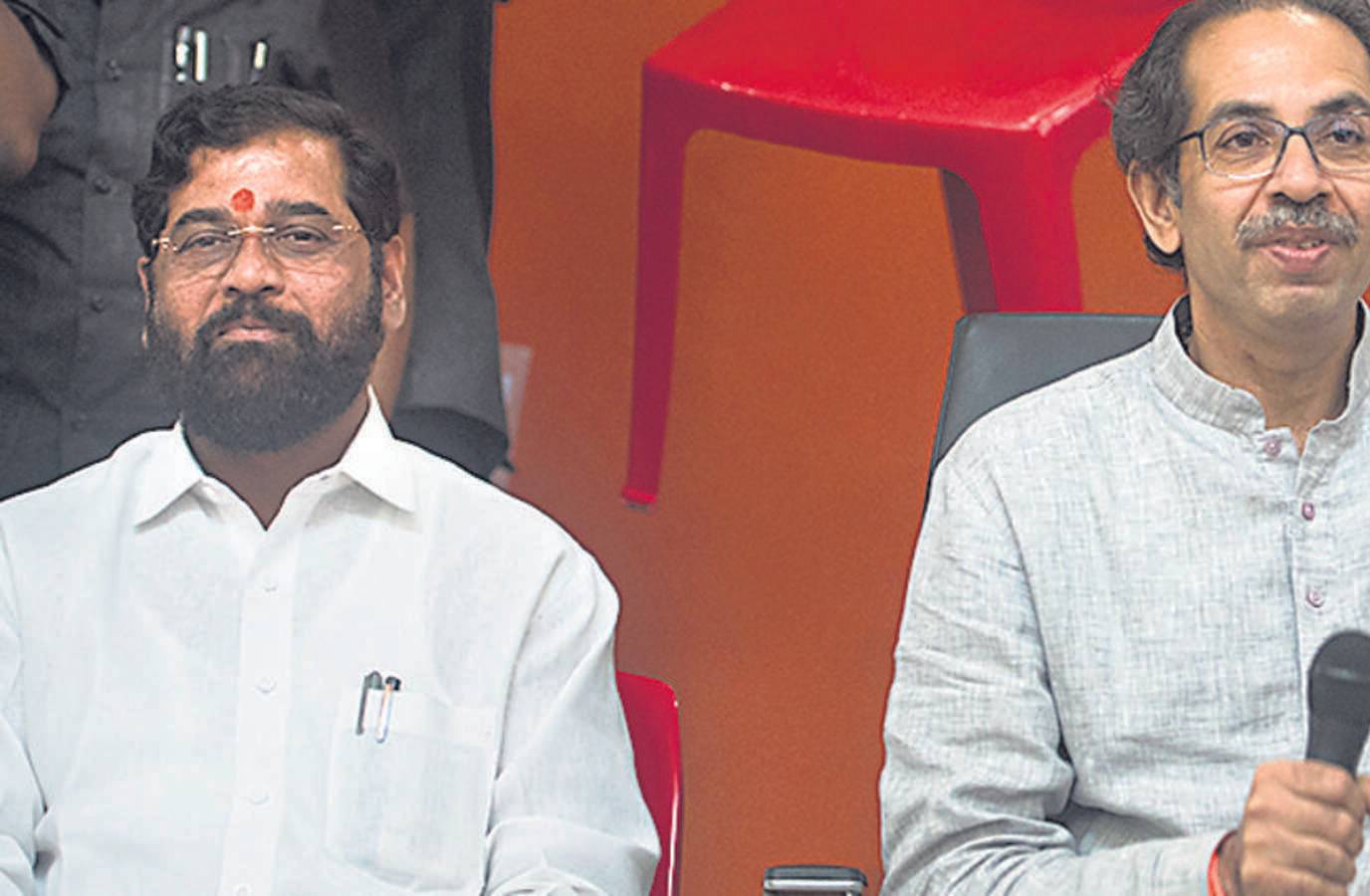
Mumbai: The recent departure of six MPs from the Uddhav Thackeray-led Shiv Sena comes at a symbolic moment, marking the party's 60th year since its foundation. The crisis reflects the weakening of the Sena's core idea and the emergence of a political order where regional parties struggle to hold ground against the dominant BJP.
Shiv Sena's appeal rested on a combination of Marathi pride, Hindutva, grassroots presence, cultural assertion, and charismatic leadership. However, the party's resilience was tested repeatedly through defections and rebellions, exposing structural weaknesses such as excessive centralisation of authority, limited internal coordination, and a leadership structure heavily dependent on the Thackeray family.
The 2022 rebellion led by Eknath Shinde challenged the principle of loyalty to the Thackeray family, a major rupture in the Sena's idea. The rebellion also exposed long-standing structural weaknesses, making it difficult for the party to articulate a developmental vision beyond identity politics and electoral pragmatism.
The BJP's rise assumes significance in this context, as it has become the principal vehicle for politicians seeking power and political security. The party's superior organisational capacity, financial resources, institutional reach, and ideological coherence have created conditions in which a challenge to the very idea of Sena became possible.
The question facing the Shiv Sena (UBT) is whether a regional party built on identity, loyalty, and local mobilisation can reinvent itself in an era shaped by centralised political power, national narratives, and the dominance of the BJP. The answer will determine not only the future of Shiv Sena (UBT) but also the future of regional politics in Maharashtra.