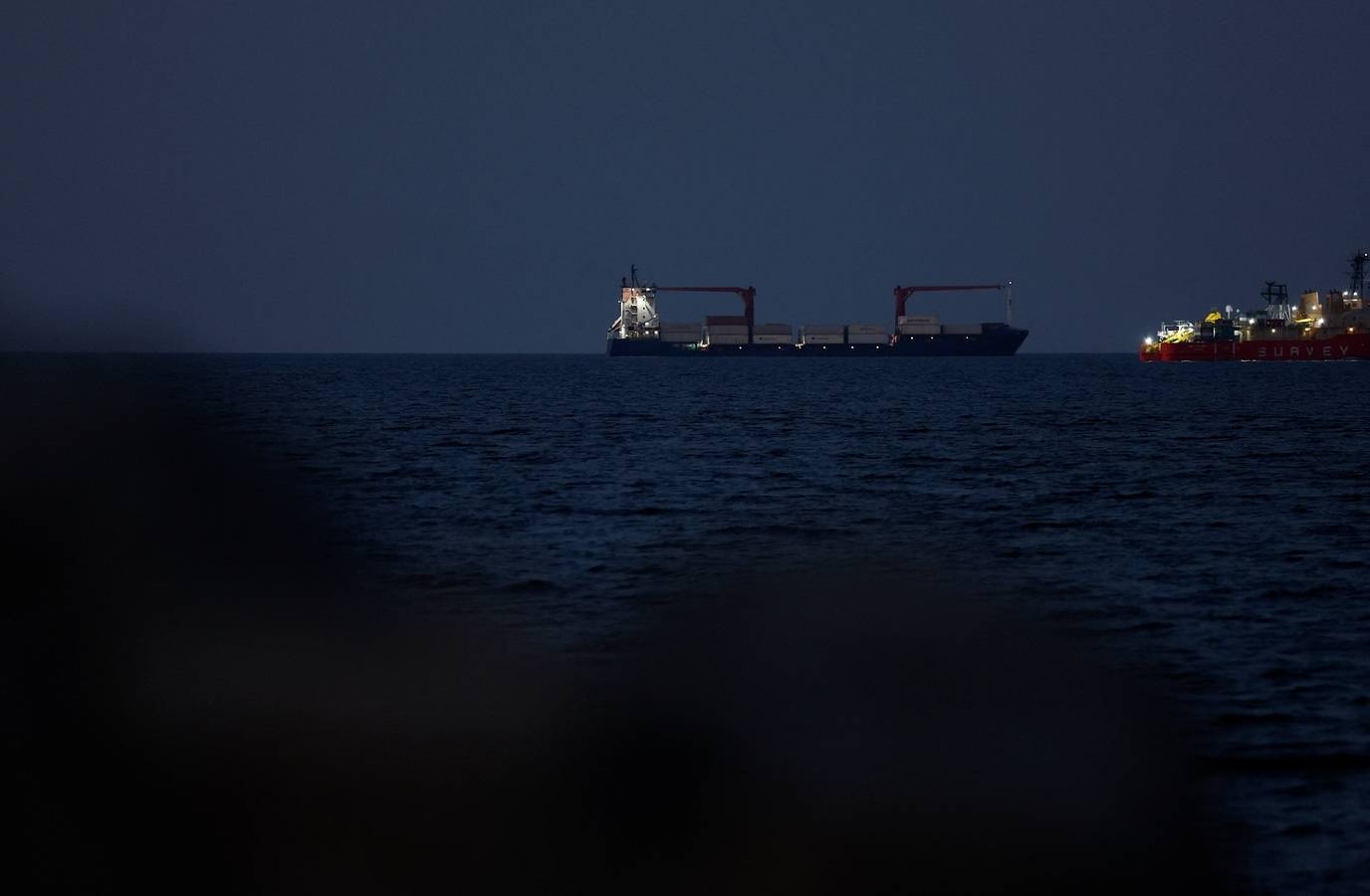
The US strikes on three commercial tankers in the waters off Oman have drawn attention to the use of 'flags of convenience' and shadow fleets in the maritime industry.
The three ships, flying the flags of Palau and Guinea-Bissau, were involved in alleged illicit activities and had been sanctioned by the US.
Maritime analysts say vessel owners often register under flags of smaller nations to evade regulatory scrutiny and reap the benefits of low costs and little oversight.
The use of 'flags of convenience' has become more commonly associated with shadow fleet operations, which involve deceptive practices to move sanctioned or high-risk commodities while concealing their true origin, ownership, or destination.
The Palau-flagged tanker was sanctioned by the US's Office of Foreign Assets Control (OFAC) in December 2025 for allegedly carrying Iranian oil and bitumen in the Gulf.
The Settebello, on which the three Indian seafarers died, had its maritime classification suspended in 2021 and was detained twice for safety violations.
The Guinea-Bissau-flagged asphalt tanker was detained at India's Haldia port in February 2026 for fire-safety deficiencies.
A 2024 study published in the peer-reviewed journal Applied Sciences noted that shadow fleets expanded sharply after Russia invaded Ukraine in February 2022 and western nations imposed sweeping sanctions on Moscow's oil exports.
The study estimated that by September 2023, the fleet accounted for 10% of global seaborne oil transportation, and around 600 tankers from a total network of roughly 6,000 were engaged in covert operations.
The evasion tactics largely involve dodging tracking, avoiding stricter regulatory scrutiny, and staying protected from sanctions.
Vessels involved in such operations are known to disable their Automatic Identification System (AIS) transponders or engage in AIS spoofing to escape scrutiny.