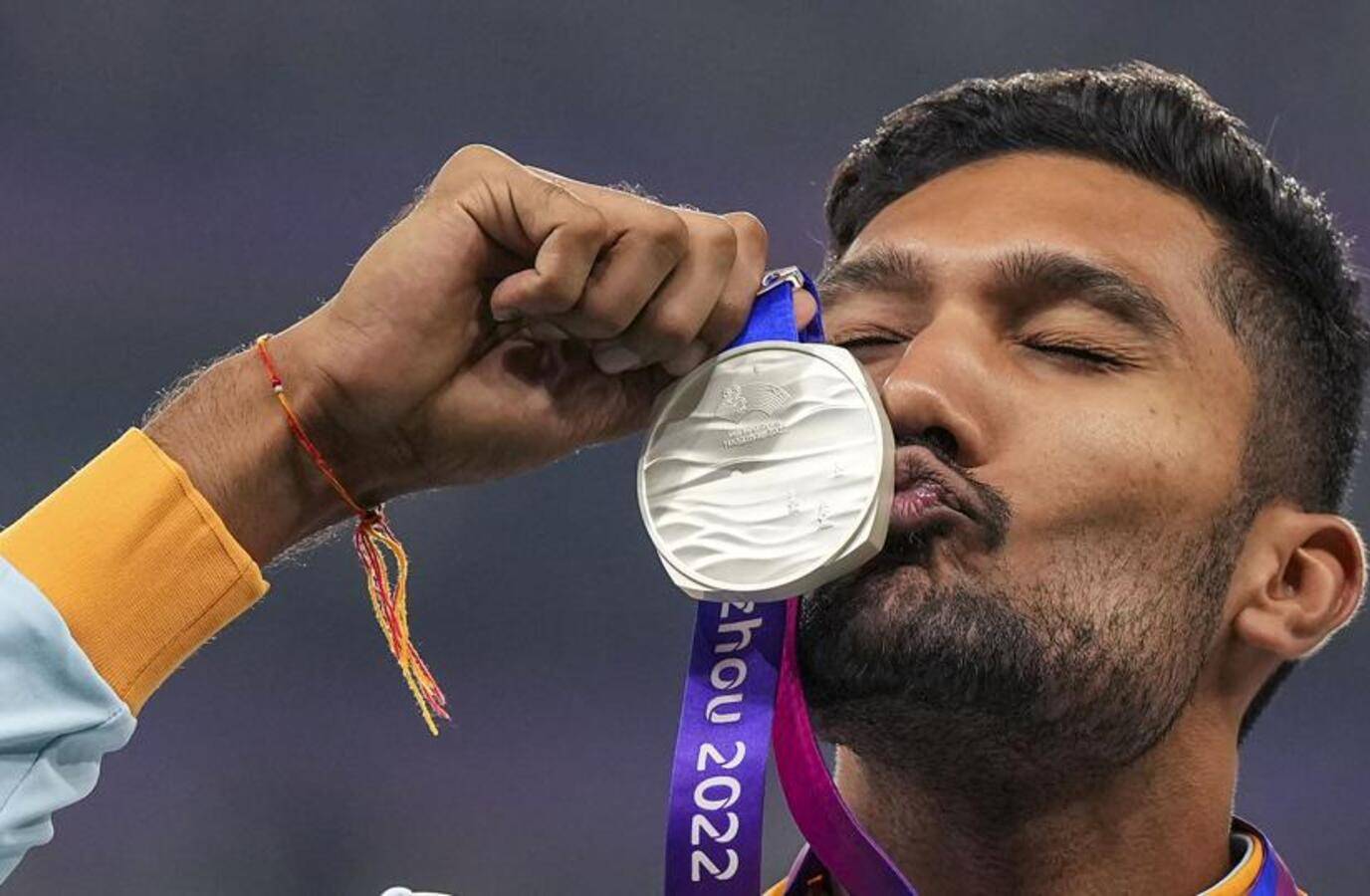
Mumbai: For most sports professionals in India, making it to the Olympics can be defining. However, for Tejaswin Shankar and Maana Patel, not making it to the 2024 Games became a defining moment that changed their outlook toward their careers and lives.
Tejaswin, the country’s top decathlete and high jumper, felt an unmistakable void as a full-time athlete. He decided to head to the University of Kansas, where he is scaling new personal bests in decathlon, studying for a Master’s in exercise science, and teaching as a graduate assistant.
Maana, the country’s lone female swimmer at the Olympics of 2021, asked herself some frank questions after not qualifying for the Olympics of 2024. She decided to pursue an MSc in Sport Management as a student-athlete at the University of Bath, and today, she works in the developmental department at World Aquatics, her sport’s global body.
Both Tejaswin and Maana are rare elite Indian sportspersons who have explored paths outside their sport, be it academics or other fields of interest. This is uncommon in the country’s sporting ecosystem, where budding athletes, even at a young age, are encouraged to maintain a single-minded focus on their primary role.
However, some exceptions aren’t averse to branching out to see what else is out there for them. For some, it might merely be an experiment. For some, it might act as a positive distraction from thinking about their sport 24x7, and help provide answers to the “what next” question after life as an athlete.
The Paris Olympics also brought a paradigm shift for Arjun Babuta, the 10m air rifle shooter who finished fourth in it. He carried the nearly-man tag for a long time, which compelled him to look at himself beyond the lens of shooting. He then chose to take up online photography lessons, and went back to practising the tabla that he had given up to keep the rifle at the centrestage.
Manu Bhaker, the double Olympic medallist, had taken up online violin tutorials months before the 2024 Games. Not being confined to her shooting shell was a key learning she highlighted from her Tokyo low to Paris high.
Tejaswin, who had completed his first Master’s degree at Kansas, too learnt from his fairly subdued 2024 and 2025 seasons that he was not “thriving” as a full-time athlete in India. Going back to his old environment and picking up “something outside of sport” felt the only right way forward.
For Maana, that distraction was academics. Always bright in it, she was at her happiest, and the fastest as a national record backstroker, when she was both swimming and studying.
When she moved to Mumbai and immersed herself completely in the pool, detached from her college in Ahmedabad, she felt “very abnormal”. “This system, of managing both class and sport, is common outside India. We don’t have that culture or system yet in India,” she said.
It’s a system some young Indian tennis players are exposed to now. Like Dhakshineswar Suresh and Aryah Shah at Wake Forest University in the US, and Maaya Rajeshwaran Revathi at the Rafa Nadal Academy in Spain.