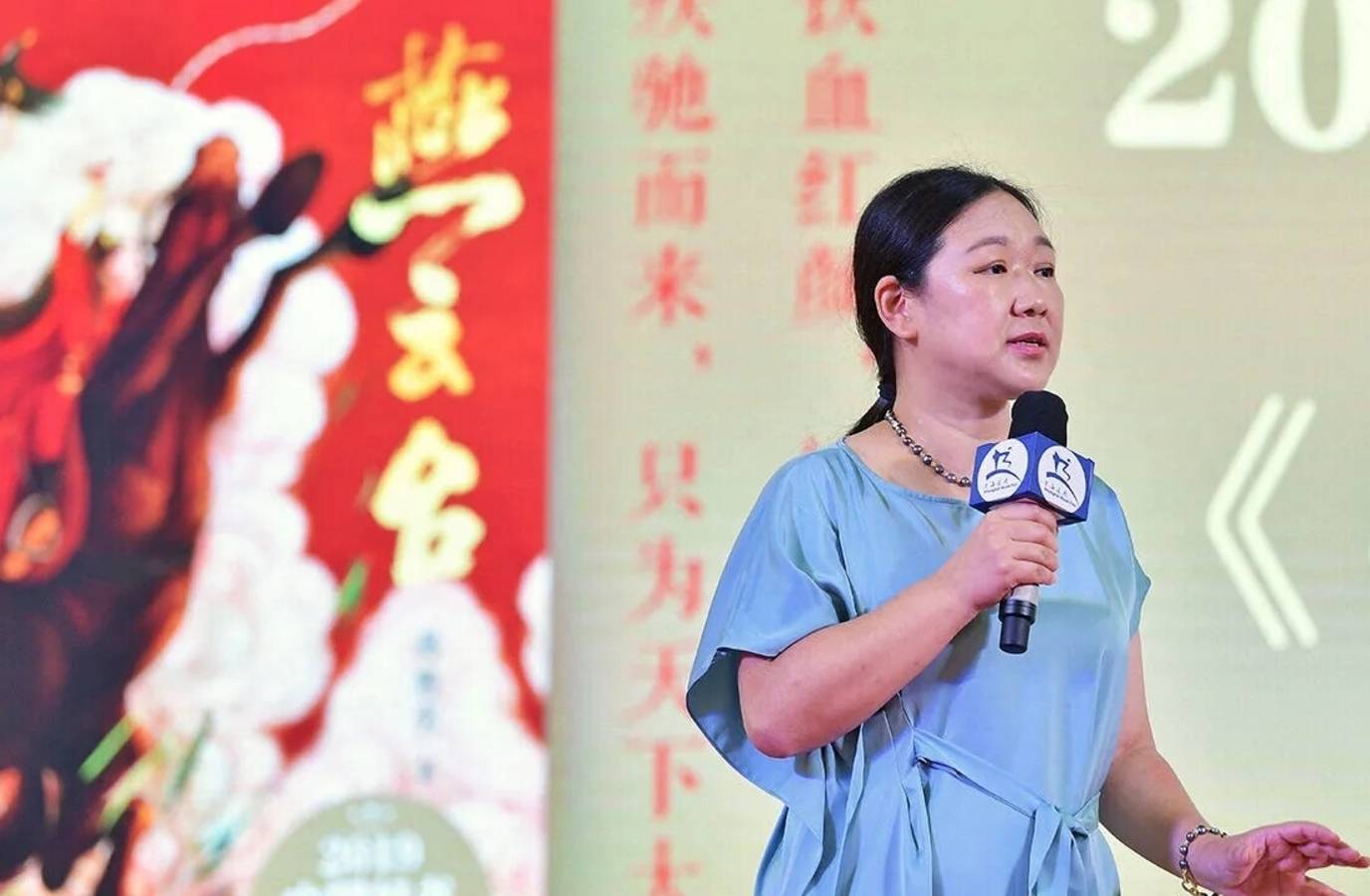
When Jiang Shengnan, a Chinese lawmaker turned political adviser, was born in 1973, a third daughter to parents in the coastal city of Wenzhou, many urged her mother to keep trying for a son. She refused and gave her daughter the name Shengnan, which means “better than men”. Ms Jiang insists she just wants women to be equal, but striving for that equality requires a mix of the resistance imbued in her name and a level of pragmatism in a country where feminism is fraught.
Mrs. Jiang grew up to be a writer of online novels in the 1990s. Her later historical work, about a concubine’s rise to become China’s first empress dowager two millennia ago, was adapted into a drama series, “The Legend of Mi Yue”, which racked up 700m views within 24 hours of its release in 2015. In addition to writing and working as a humanities researcher at Wenzhou University, she entered politics in 2018 as a legislator in the National People’s Congress (npc) and became one of the most prominent champions of women’s rights.
Women make up a quarter of the npc and a fifth of the cppcc, but none are currently in the highest echelon, the Politburo. In political affairs the npc is a mere rubber-stamp parliament, where lawmakers approve rather than argue. Yet on social issues, where the Communist Party carefully gauges popular opinion in order to maintain stability, there remains space to push back and debate.
Under Xi Jinping’s rule, any hint of organising outside the system on sensitive issues has been quashed. That has made working within the system ever more important. In 2015 five feminist activists were arrested for planning to demonstrate against sexual harassment on public transport, despite government warnings. Their high-profile month-long detention marked a new crackdown on feminist activism, even as more women seek equal treatment at home and in the workplace.
All of that makes Ms Jiang more pragmatic. She aligns her proposals, such as extending paternity leave and curbing overtime, with government goals. For instance, the party is desperate for women to have more children to stem demographic decline, and Ms Jiang says many of her proposals serve that goal. She puts forward solutions rather than problems. “I’m not a feminist,” she tells The Economist, steering clear of a label associated with outside-the-system activism. “We’re fighting against uncivilised old ideas, habits and harmful perspectives that linger, we are not fighting against gender. That is pointless.”
This year, the soft-spoken 52-year-old started a campaign to ban the forced marriage of rural women with learning disabilities. In 2022 a video was posted online showing a woman chained in a shack. She turned out to have been trafficked and had given birth to eight children. It ignited fury across China.
Mrs. Jiang is good at channelling anger on such issues into reform. One breakthrough came in her push for rural women’s land rights in order to counter a preference for sons over daughters. Chinese tradition had meant that they lost their rights to land if they married men from outside their villages, but in recent years more rural women have fought back in the courts. In 2024 Ms Jiang recommended legal protections for “married-out women”. Later that year, the government passed a provision stipulating the equal rights of rural women regardless of marital status.
Change in a conservative system is slow but, in a political realm of distant men, Ms Jiang is known as a woman who is accessible to ordinary people. She shares her email address with her 1.3m followers on Weibo, China’s X. For several years, men and women have been writing to her about widespread discrimination in hiring people over 35. In 2022 she recommended amending the age limit for civil-service recruitment to send a broader signal. Her proposal was not initially adopted. “But later, many other members raised the issue. Now we see that many civil-service-recruitment policies are relaxing the age limit,” she says. “You’re not fighting alone. Many people are taking up the baton.”