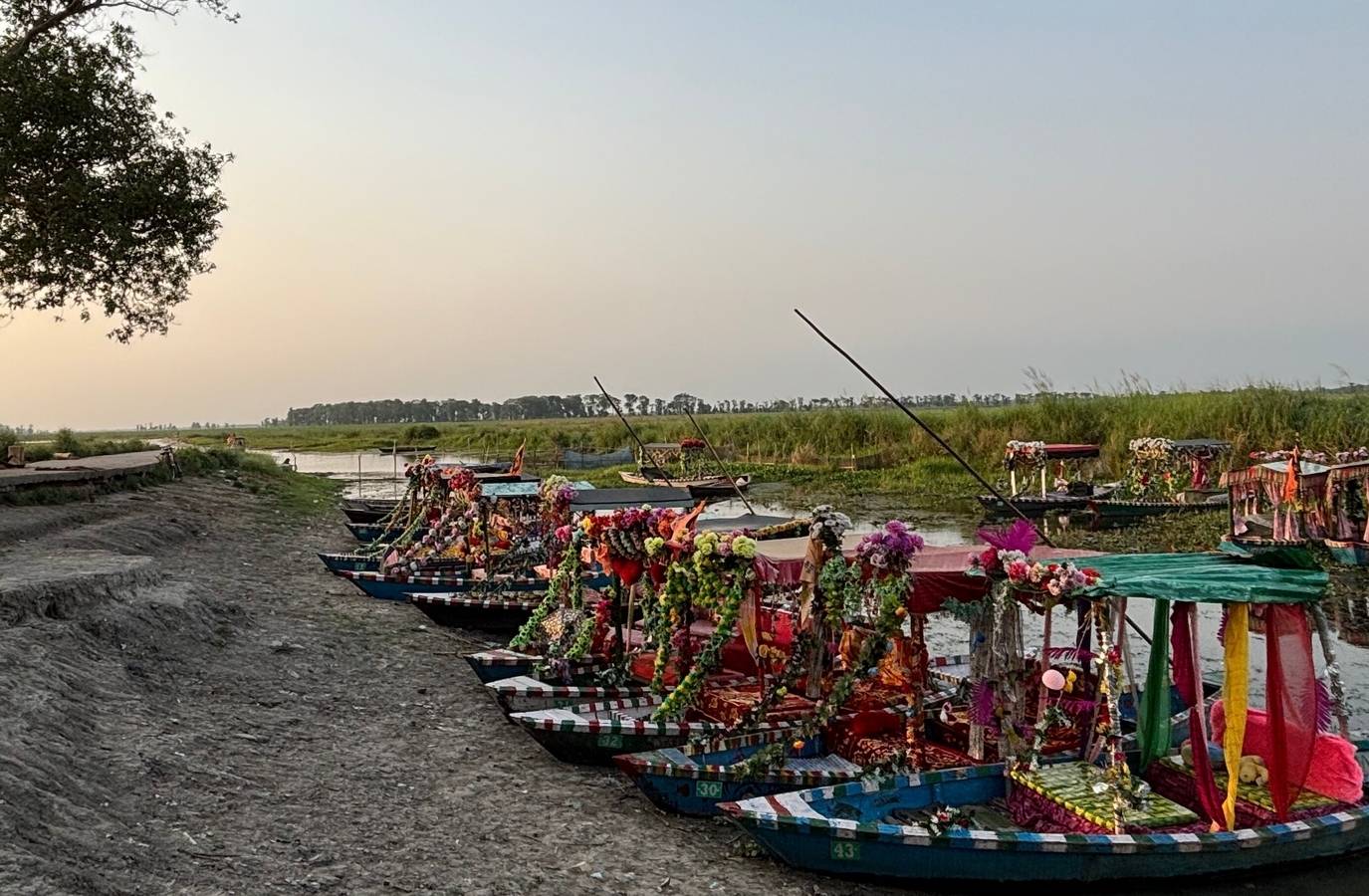
Naresh Sahni, a 40-year-old fisherman, anxiously waits for visitors at Kanwar Lake, Asia's largest oxbow lake, in Bihar. The lake, once a thriving ecosystem, is now on the brink of collapse due to decades of neglect and human activities.
The lake, which was declared a protected site in 1986, has seen a significant decline in fish catch, with only 25% of the original varieties remaining. The once-thriving lake, which attracted migratory birds and supported a variety of flora and fauna, is now struggling to survive.
The main reasons behind the lake's decline are human encroachment, climate change, and conflicting interests between farmers and fishermen. The lake's water level has been decreasing over the years, exposing large stretches of land and making it difficult for the fish to survive.
The government has come up with several plans to conserve the lake, including a check dam and demarcation of private land. However, these efforts have yielded little results due to conflicting interests and lack of policy implementation.
Naresh Sahni and his family are traditional fishermen who depend on the lake for their livelihood. They have been fighting to save the lake, but their efforts have been met with resistance from farmers and landowners.
The future of the lake looks bleak, with experts warning that it may eventually dry out. The lake's decline is a stark reminder of the importance of preserving our natural heritage and the need for sustainable development.