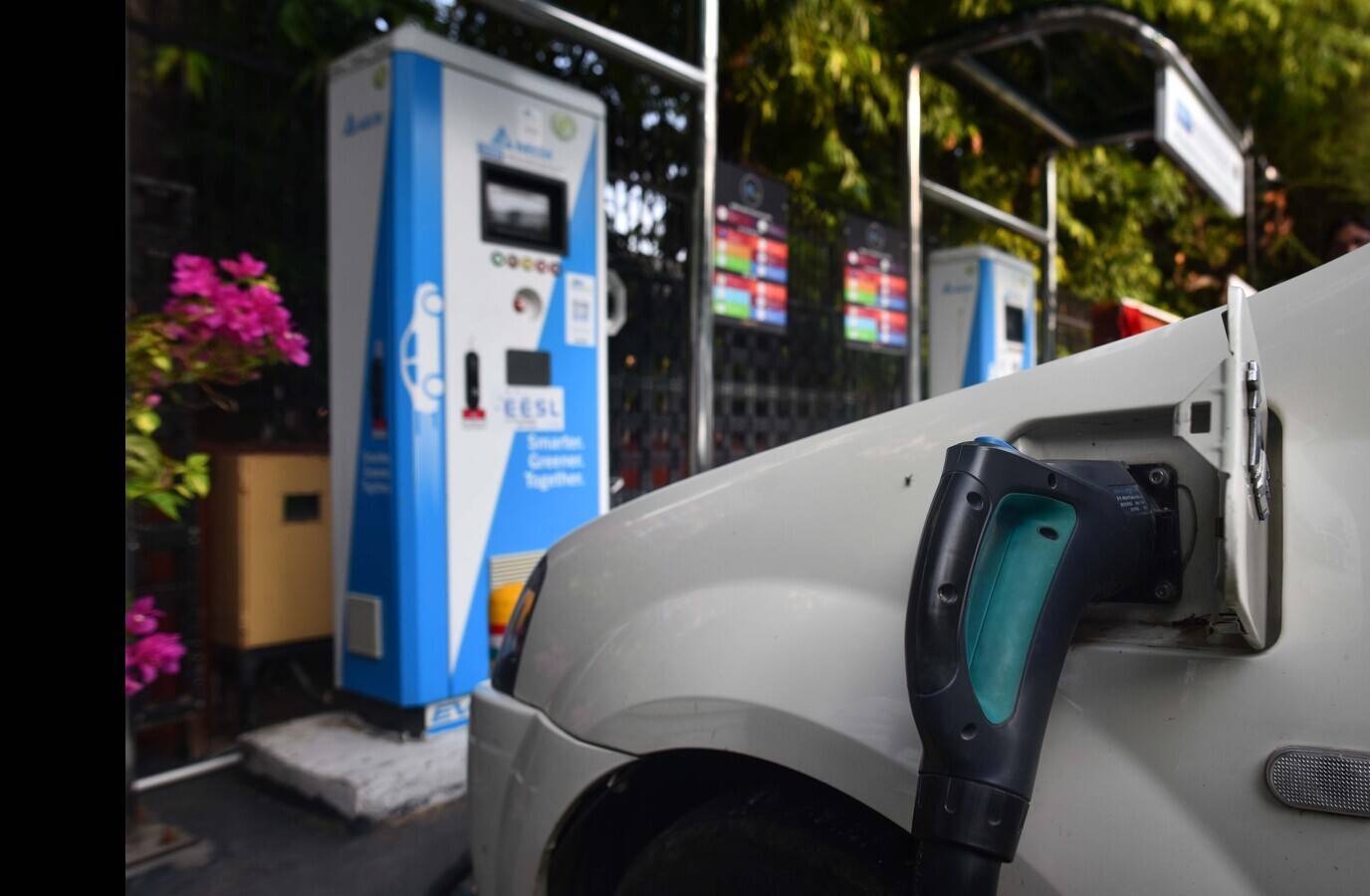
The Indian government's efforts to promote electric vehicles (EVs) have failed to scale, despite various schemes and targets. The Lok Sabha secretariat is allocating EVs to 40 senior staffers, while Convergence Energy Services Limited is developing an EV-leasing model for government use. However, these initiatives lack specific targets or firm timelines.
Experts argue that the government needs to adopt more efficient policy levers, such as Zero Emission Vehicle (ZEV) mandates, to drive EV adoption. ZEV mandates require automakers to sell a minimum share of zero-emission vehicles, creating a predictable long-term market signal.
India's EV penetration stands at just above 8%, while the global average is already at 25%. Countries like Vietnam, Thailand, and Indonesia have left India behind in terms of EV adoption. A Niti Aayog report said that India has progressed to only about 7.6% of sales in 2024 being electric, which is far behind its target of 30% by 2030.
Experts call for a definitive electrification target for each government department, with mandatory reporting on achievement. They also suggest that the government needs to look beyond demand-side incentives and support programmes and adopt more efficient policy levers, such as ZEV mandates and coherent corporate average fuel efficiency (CAFE) norms.