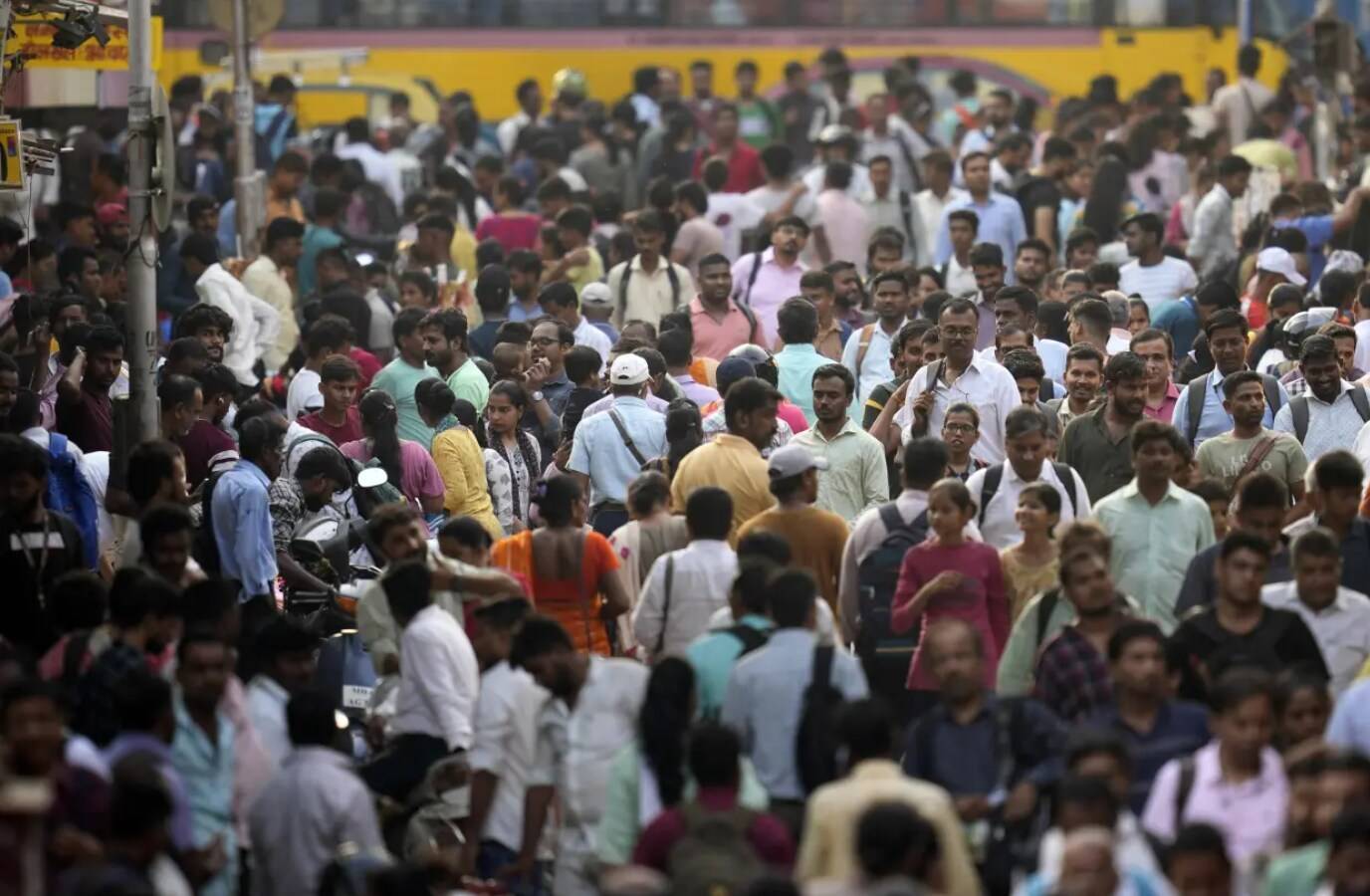
India's Total Fertility Rate (TFR) has fallen below the replacement threshold for the first time, according to the Sample Registration System Statistical Report 2024.
The national TFR has moved below the replacement benchmark of 2.1, indicating that the average number of children a woman is expected to have during her lifetime is now below the level required to maintain a stable population over time.
India's population is expected to keep increasing for some years, but unless fertility climbs above 2.15 again, a decline in population is unavoidable in the future.
Researchers at the University of Washington's Institute for Health Metrics and Evaluation (IHME) estimate that India's population will reach its highest point in 21 years before beginning a steep decline, with the country's population projected to be slightly above one billion by the end of the century.
Major differences across regions have been observed, with Bihar recording the highest fertility rate in the country at 2.9, while Delhi recorded the lowest TFR in the country at 1.2, which is lower than Finland's 1.3.