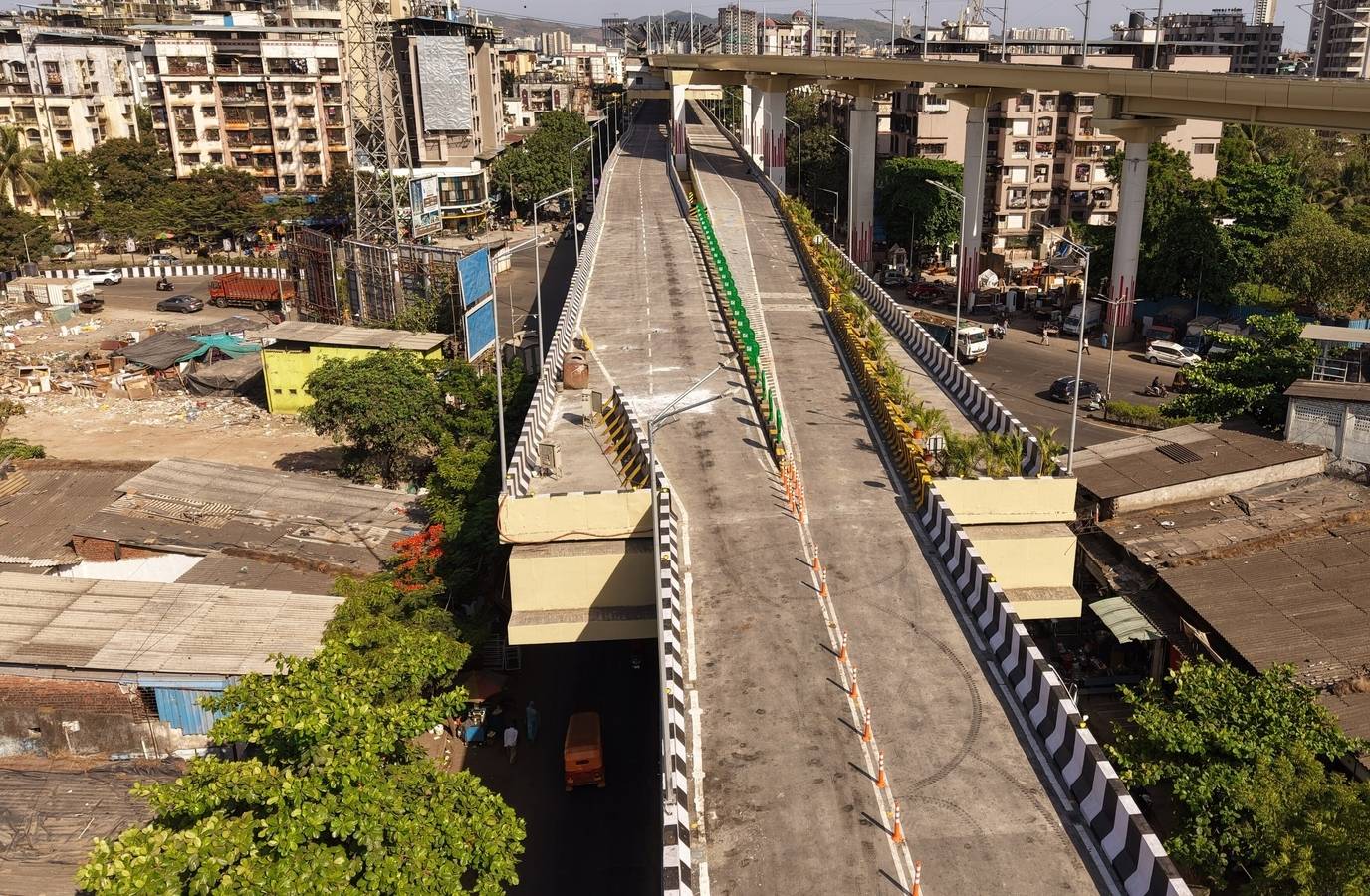
The recent Mira-Bhayandar double-decker flyover in Mumbai, India, has sparked widespread outrage and ridicule due to its poorly designed transition from four lanes to two lanes. The incident has highlighted the country's ongoing issue with 'stupid projects' that consume public funds, destroy green spaces, and fail to deliver on their promises.
The flyover's design has been widely criticized, with many questioning how such a flawed project could have been approved. The Mumbai Metropolitan Region Development Authority (MMRDA) initially defended the design, claiming it was based on available road-width constraints and future network planning. However, following public backlash, the MMRDA collaborated with IIT-Bombay to introduce safety features, including gradual lane tapers and lane-guiding bollards.
The Mira-Bhayandar flyover is not an isolated incident. Several other projects across India have made headlines for their absurd designs, including a railway overbridge in Bhopal with a seemingly 90-degree turn and a flyover in Nagpur that almost sliced through a residential balcony.
Experts attribute the issue to a lack of unified, holistic planning, with infrastructure projects often being planned in silos without considering urban design and long-term liveability. The country's planning philosophy remains overly focused on road expansion and expressways, which can reinforce car dependency rather than addressing core mobility and access issues.
Greenpeace India activists have staged protests across Bengaluru to highlight the issue, plastering giant prints of Edvard Munch's iconic painting The Scream onto unfinished concrete pillars of long-stalled flyovers. The campaign aims to raise awareness about thoughtless, unscientific, and undemocratic development and to demand genuine public consultation for infrastructure projects.