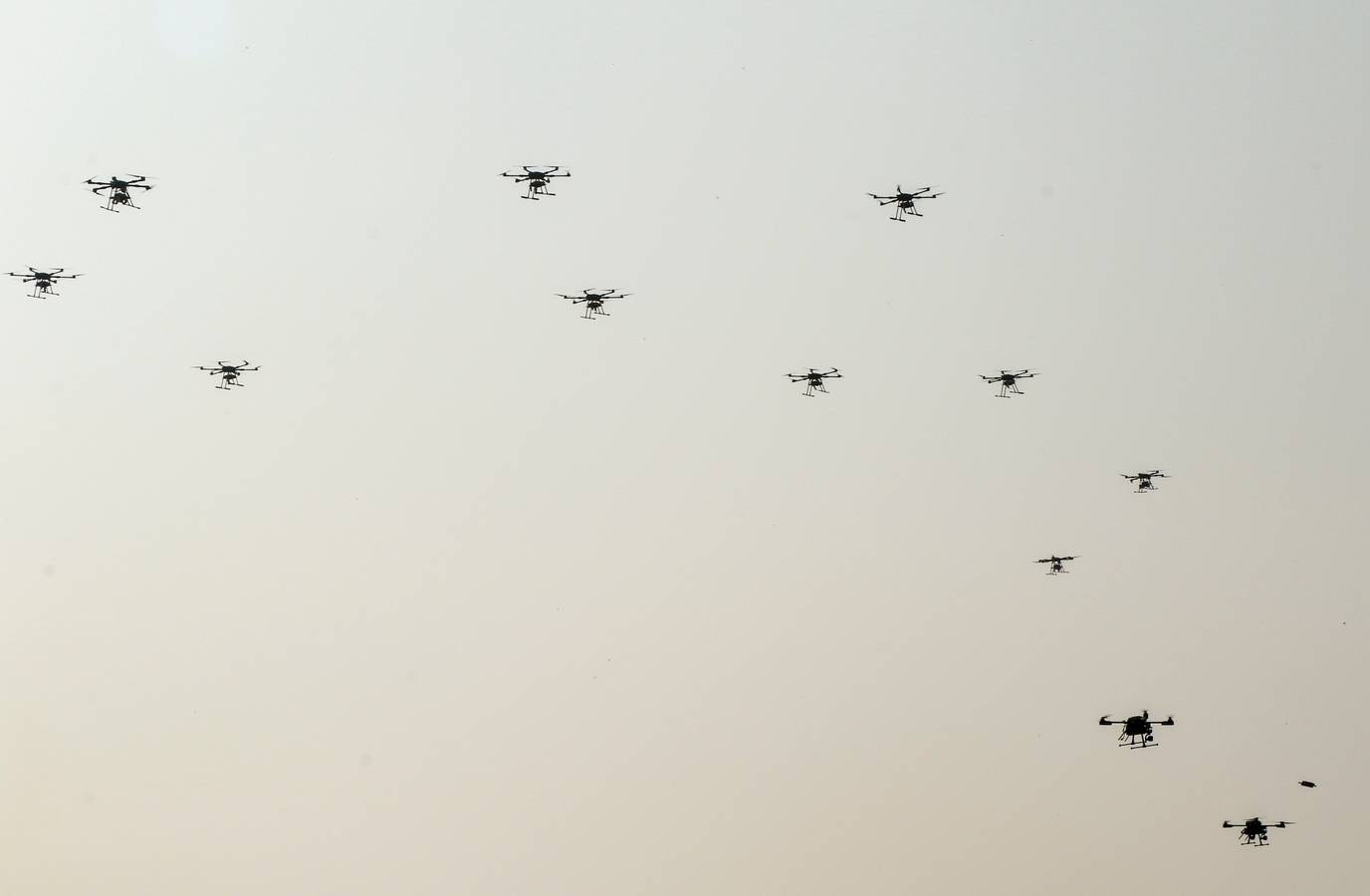
The Indian Army plans to induct tens of thousands of locally-made unmanned aerial systems and loitering munitions over the next five years to enhance its battlefield capabilities.
The army's requirement spans 80 different types of unmanned systems for specific roles including intelligence, surveillance, and reconnaissance, precision strikes, munition dropping, air defence, jamming, mine warfare, data relay, and logistics.
The technology roadmap aims to harness indigenous capabilities for an edge on the battlefield, ensuring that India's drone ecosystem evolves in a structured, demand-driven manner.
The systems required by the army for surveillance include high altitude long endurance UAS, medium altitude long endurance UAS, high altitude pseudo satellites, and unmanned air littoral systems (UALs) for long/medium/short range surveillance.
The army is seeking loitering munitions to strike at long, medium and short ranges, drone swarms (for surveillance and strike), and FRV (first-person view) drones with strike capability.