Sonia Gandhi says India's 'silence' on Khamenei death is abdication| India News
Sonia Gandhi stated that silence here is "abdication" when India has long aspired to be more than a regional power.| India News
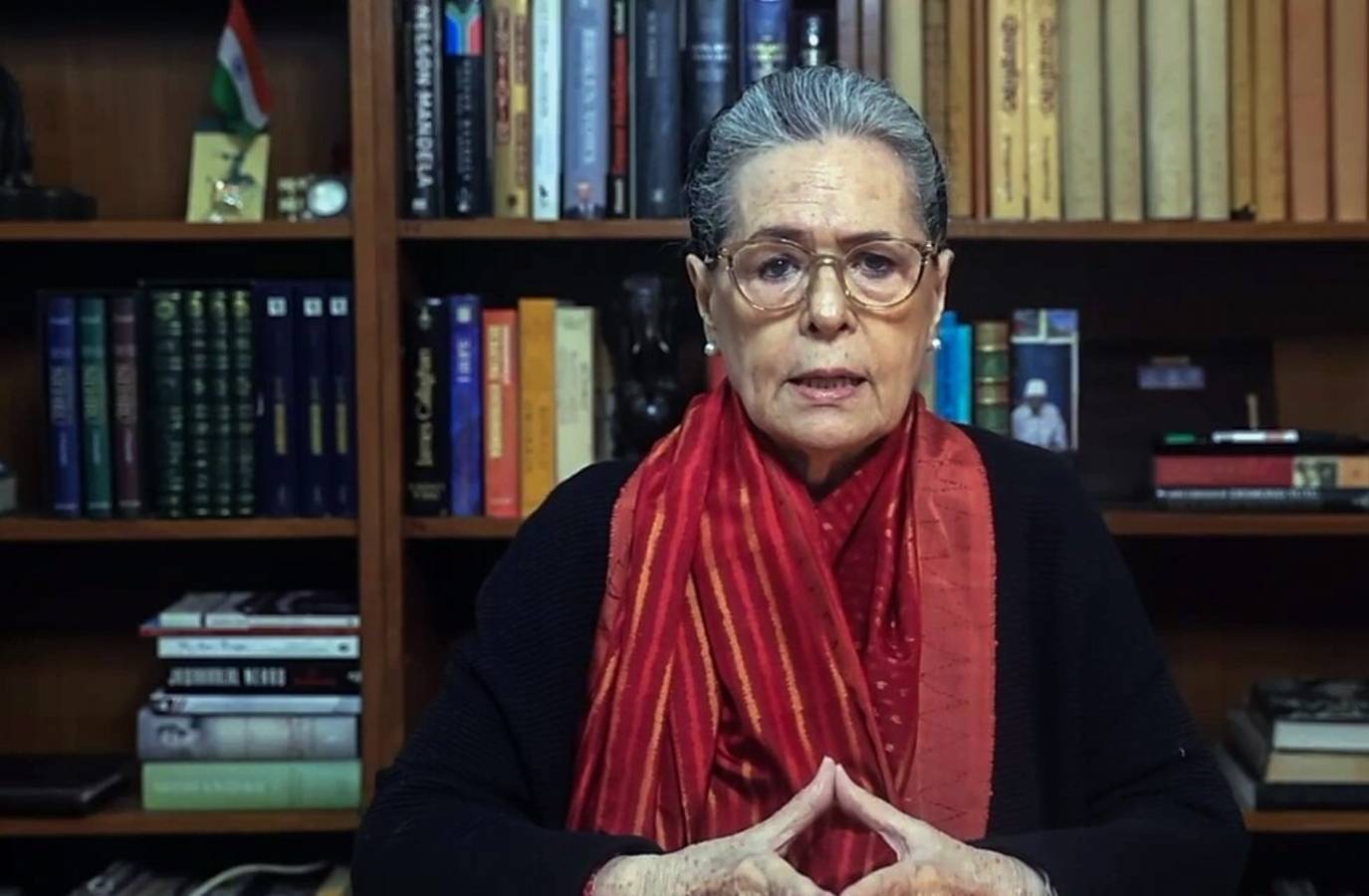
Congress Parliamentary Party chairperson and Rajya Sabha member Sonia Gandhi questioned the timing of Prime Minister Narendra Modi's visit to Israel in the wake of the joint US-Israeli strikes on Iran and slammed the Centre's 'silence' on the killing of Iranian Supreme Leader Ayatollah Ali Khamenei.She said that silence in this matter is "not neutral", citing that Khamenei's killing violated the rules of the UN charter. In an article published in The Indian Express, Sonia Gandhi said that no clear remarks from India on the targeted killing of a foreign leader "raises serious doubts about the direction and credibility of our foreign policy". Follow live updates on US-Iran war's impact on IndiaShe cited Article 2(4) of the United Nations Charter, stating that it "prohibits the threat or use of force against the territorial integrity or political independence of any state", adding that the killing of a sitting head of state violates the very core of these principles."If such acts pass without principled objection from the world's largest democracy, the erosion of international norms becomes easier to normalise," Gandhi added.She went on to question the "unease" in the timing of the US-Israeli strikes and PM Modi's visit to Israel.ALSO READ | ‘India never looked this weak’: Oppn flays PM Modi over ‘complete betrayal’ of Iran, silence on Khamenei's killing"Barely 48 hours before the assassination, the Prime Minister returned from a visit to Israel, where he reiterated unequivocal support for the government of Benjamin Netanyahu -- even as the Gaza conflict continues to draw global outrage over the scale of civilian casualties, many of them women and children," the Congress Rajya Sabha member wrote in the article.According to Sonia Gandhi, India's "high-profile political endorsement" without moral clarity, when much of the Global South, along with New Delhi's BRICS partners, has kept its distance, "marks a visible and troubling departure".The Congress leader recalled former prime minister Atal Bihari Vajpayee's official visit to Tehran in April 2001, where he "reaffirmed warmly India's deep ties with Iran, both civilisational and contemporary". Sonia Gandhi said, "His acknowledgement of those long-standing relations seems to hold no relevance for our current government."ALSO READ | Modi dials Netanyahu, seeks ‘cessation of hostilities’ amid Middle East tensionsSonia Gandhi said that India's maintained relations with both Iran and Israel are why New Delhi has the diplomatic space to urge restraint. However, she said, such space depends on credibility, which in turn is based on the perception that India speaks from principle.Noting that nearly 10 million Indians reside and work across the Gulf, the Congress leader said, "India's ability to safeguard its citizens has rested on its credibility as an independent actor, not as a proxy."She said that credibility stems from the country's post-Independence foreign policy, which was shaped by non-alignment, adding that it was a refusal to be subsumed into rivalries of great powers."An uncritical silence in the face of unilateral military action by powerful states looks like retreat from that principle. And in effect, an abandonment of our legacy," she wrote.Sonia Gandhi went on to say that while India has repeatedly argued for a rules-based international order that protects the weak, that "argument rings hollow" if it is not voiced when the test is immediate and uncomfortable.ALSO READ | PM Modi should play important role in stopping war in Iran, says Owaisi"Why should countries in the Global South trust India to defend their territorial integrity tomorrow if it appears hesitant to defend that principle today?" she asked.She called for a Parliamentary debate on the Modi government's "disturbing silence" on the Iran conflict.Sonia Gandhi stated that silence is "abdication" when India has long aspired to be more than a regional power. She said that there is an urgency for the country to rediscover its moral strength and articulate it with clarity and commitment.What PM Modi said on Middle East tensionsDuring a press conference on Monday, Prime Minister Narendra Modi said that the ongoing situation in the Middle East is a "grave concern" for India.He called for the resolution of all conflicts through dialogue and diplomacy. PM Modi also assured that the Indian government will keep working with authorities in West Asia to ensure the safety of Indian nationals there.PM Modi reiterated India's foreign policy stance and said that the country has always been an advocate for peace and global tensions. "India's stance has always been clear on tensions across the world. India has consistently advocated for peace and stability, and when two democracies stand together, the call for peace becomes stronger," he added.