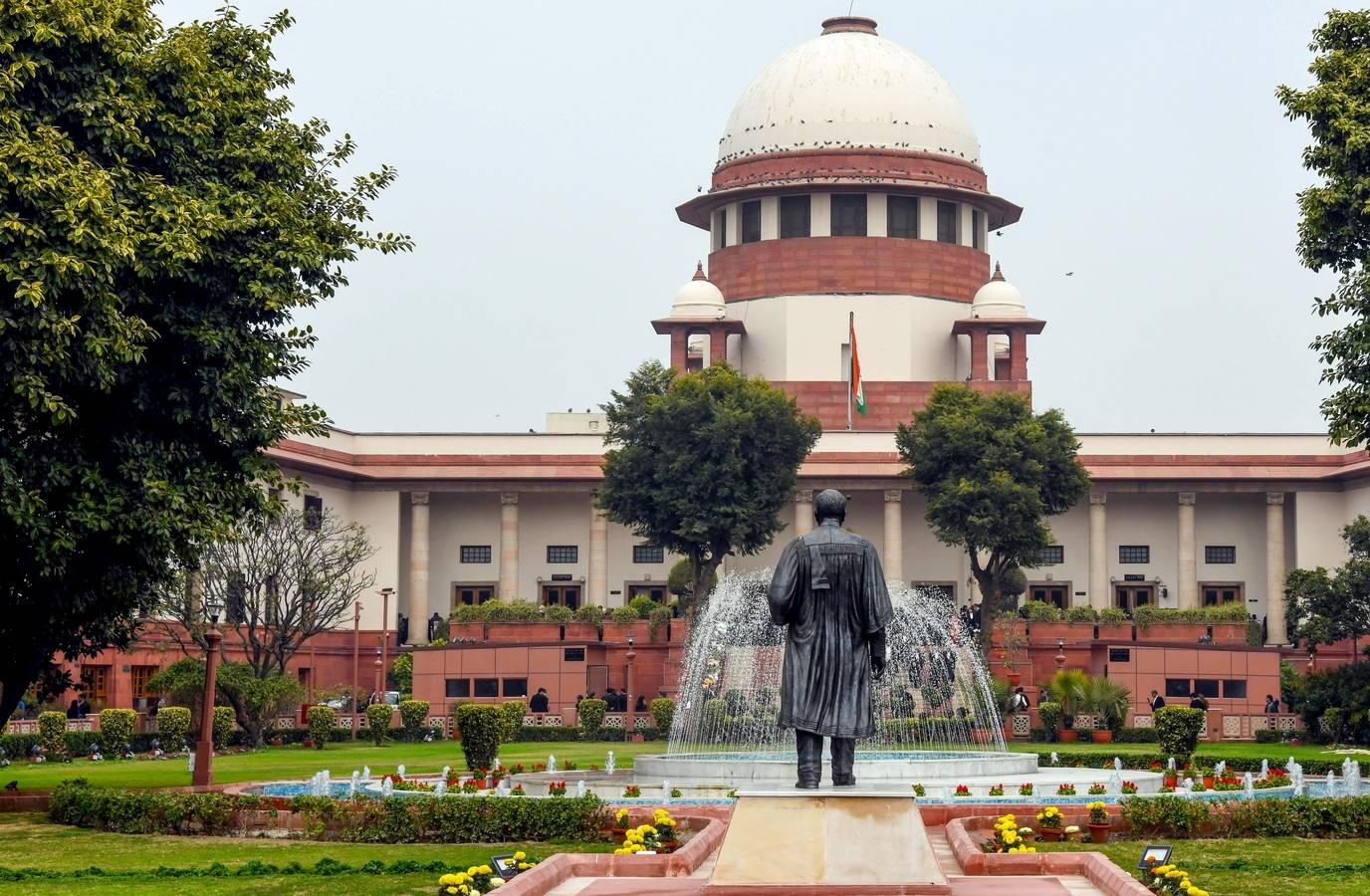
The Supreme Court has questioned the Election Commission of India (ECI) over introducing a 'logical discrepancy' category to identify doubtful voters only in West Bengal's special intensive revision (SIR) of electoral rolls.
A total of six million voters were placed under the category after the draft roll was published; of this, 2.71 million voters were removed after failing to address the discrepancies.
The court emphasized the need for a 'robust appellate mechanism' to address grievances of those excluded from voter lists.
The bench comprising Chief Justice of India Surya Kant and Justice Joymalya Bagchi observed that the right to vote is not merely constitutional but one of the strongest expressions of democratic participation and nationalism.
The court pointed out that exclusions from electoral rolls cannot be treated lightly and that a 'logical discrepancy' category was not used during the Bihar exercise.
The court also highlighted that the ECI's original notification did not touch the 2002 list, yet the rejection reasons now hinge on it.
The bench rejected any suggestion that the scale of the exercise could justify questionable methods, stating that 'it's not end justifying means but means justifying the end.'
The court maintained that interference in electoral outcomes would remain limited and contingent on demonstrable impact.