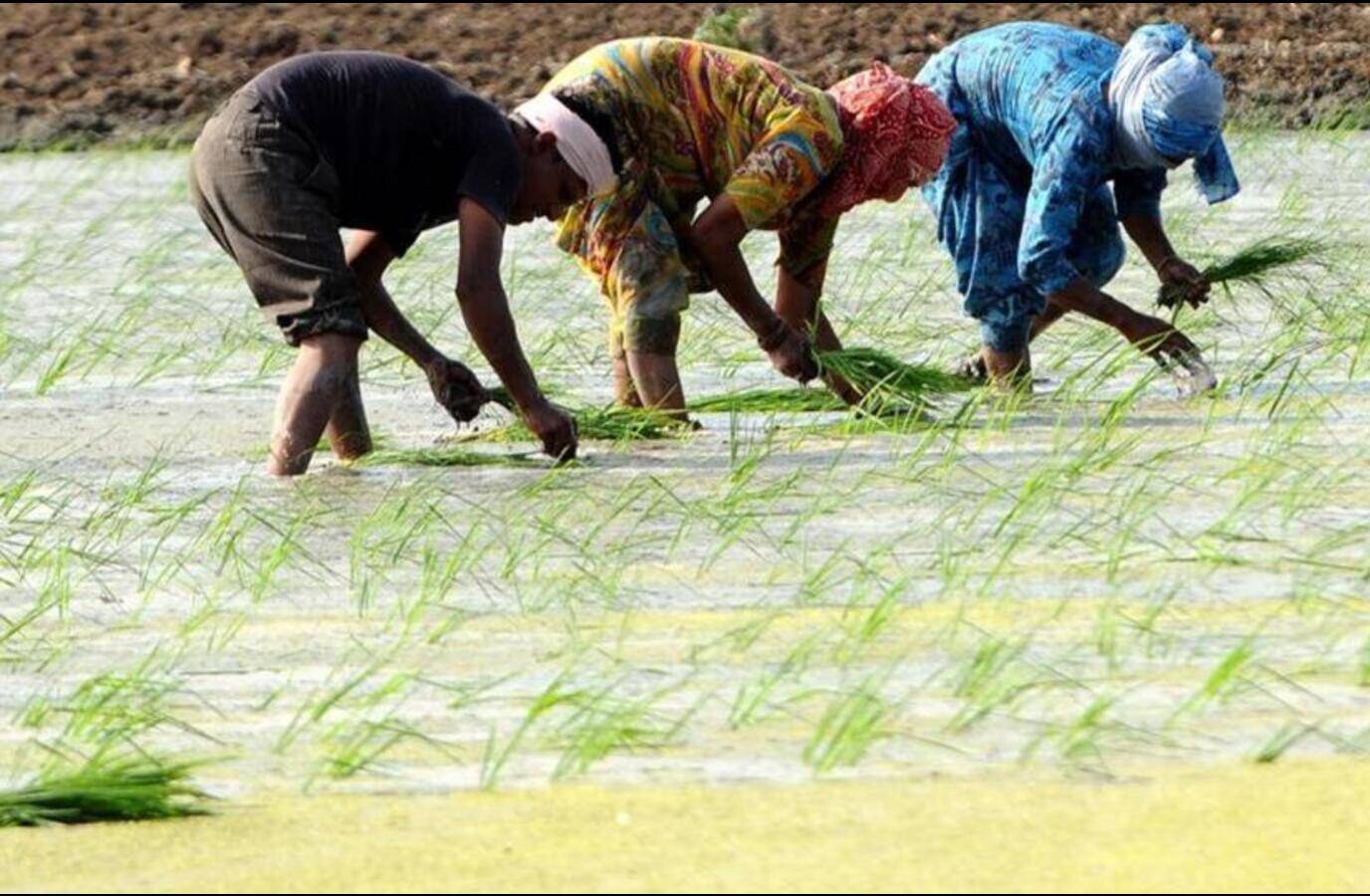
Heatwaves are set to become a major threat to Indian agriculture workers and rice production, with labour productivity projected to drop sharply in key regions like the Indo-Gangetic plains under high-emission scenarios, a UN report warns.
The report, released by the Food and Agriculture Organisation and the World Meteorological Organisation, highlights the risks of extreme heat to Indian agriculture, particularly in densely populated regions of the Ganges and Indus river basins.
India's rice farming, which employs millions of agricultural workers, is particularly vulnerable to heat stress, with the report warning that extremes of wet-bulb temperature in South Asia are likely to approach and, in some locations, exceed critical thresholds for worker safety by the late twenty-first century under high-emission scenarios.
The report also notes that India's agriculture is already vulnerable to weather extremes, with the 20% deficit in monsoon rainfall in 2002 resulting in billions of dollars in economic damage and affecting more than a billion people.
To mitigate the impacts of extreme heat, the report suggests several strategies, including using cultivars that flower early in the morning, adjusting sowing and planting times, and breeding genetically resistant cultivars.
Additionally, the report highlights the need for innovation and the implementation of adaptive measures such as selective breeding and crop choices suited to the new climate reality, adjusting planting windows, and altering management practices that can protect crops and agricultural activities from the impacts of extreme heat.